Fabric Collage Travel Memory Poster
Full prompt
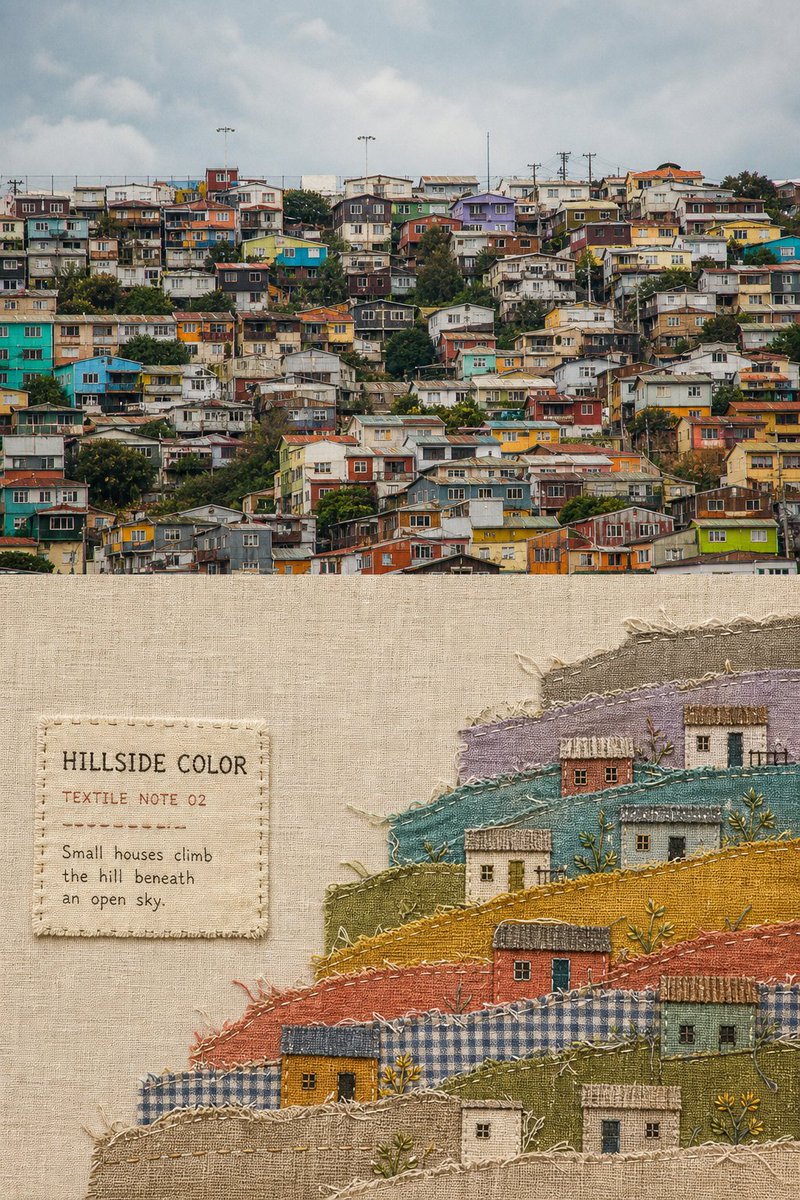
Please transform each travel photo I upload into an individual premium fabric collage memory poster. Each photo should be output separately, not as a multi-photo montage. The overall layout uses a 3:4 vertical composition. The final product must simultaneously feature the clearly identifiable original photograph and a fabric collage re-interpretation of the same scene.

The top part retains approximately 46%–52% of the original photo, faithfully maintaining the identity, quantity, posture, architectural structures, mountain/water layers, horizon, roads, water surfaces, real textures, natural light and shadow, and original colors, with only minor color grading similar to travel magazines or art publications. Do not stretch, mirror, change subjects, or turn the photo into an illustration.

The bottom part uses warm natural linen, old cotton, or faded fabrics as a base. First, understand the ridges, clouds, buildings, groves, water surfaces, roads, people, animals, or vehicles that truly determine the recognizability of the photo, then compress the complex scene into 4–8 main fabric layers. Reorganize the same scene using faded cotton, coarse linen, denim, plaid, corduroy, old shirt fabric, gauze, and a minimal amount of yarn; each piece of fabric must correspond to the real spatial relationships in the photo, adding no irrelevant decorations.

The fabric layers should retain real warp and weft textures, washed-out fading, frayed edges, loose threads, creases, overlapping patches, and slight thickness. Use uneven hand-stitching, overcasting, backstitching, and a small amount of embroidery thread to emphasize subject outlines, ridges, reflections, or direction of movement. Stitches can be hesitant, loose, or varying in density, but do not make it look like a refined craft sample. People and animals should only be summarized with small fabric scraps and stitch marks, maintaining their count, posture, and orientation without depicting facial features.

The bottom part adopts a structured secondary composition: the main fabric collage occupies about 58%–76% of the re-interpretation area. It can be shrunk into an independent scene or formed with a few large fabric layers for a strong silhouette; do not simply redo the photo's full framing in equal proportions. Leave at least 25%–40% of continuous visible linen or old cotton empty space around the collage.

Colors are extracted entirely from the original photo and softened, prioritizing the retention of the most recognizable color of the location, while the rest are unified into low-to-medium saturation old fabric tones. Do not use fixed patterns like rural floral prints or orange-blue palettes.

In the bottom white space, add a 1–3 word English title, a woven label-style number, and a 5–10 word English observation sentence. The title should look like slightly uneven hand-embroidered letters; the label and observation sentence should look like old woven labels or fine-stitch text sewn onto the base fabric, clearly readable at normal preview size. The text must come from the actual visible location, action, weather, or color in the photo; use the scene theme if the location cannot be confirmed, and do not fabricate place names or dates.

The overall vibe is warm, quiet, handmade, and nostalgic, like preserved travel memories.

Mandatory avoidances: paper collage, torn paper edges, pure felt painting, tufted rugs, crochet dolls, refined embroidery templates, lace buttons, scrapbook clutter, printed photo patches, smooth vector blocks, plastic synthetic fabrics, children's crafts, completely filling the bottom half, fixed sunset color schemes, author names, signatures, logos, QR codes, watermarks, gibberish.
Original prompt
请将我上传的每一张旅行照片分别制作成一张独立的高级布艺拼贴记忆海报,每张照片单独输出,不多图拼接。整体采用3:4竖版构图,成品中必须同时出现清楚可辨的原始摄影与同场景布艺转绘。

上方保留原始照片约46%–52%,忠实保持主体身份、数量、姿态、建筑结构、山水层次、地平线、道路、水面、真实材质、自然光影和原有色彩,只进行轻微旅行杂志与艺术出版物调色。不得拉伸、镜像、改变主体或把照片画成插画。

下方使用温暖的天然亚麻、旧棉布或褪色织物作为基底。先理解照片中真正决定识别度的山脊、云层、建筑、树群、水面、道路、人物、动物或车辆,再将复杂场景压缩成4–8个主要布层。使用褪色棉布、粗亚麻、牛仔、格纹布、灯芯绒、旧衬衫布、纱布和极少量毛线重新组织同一场景;每块布都必须对应照片中的真实空间关系,不添加无关装饰。

布层保留真实经纬纹、洗旧褪色、毛边、抽丝、折痕、补丁叠压与轻微厚度。使用不均匀手缝线、锁边、回针和少量刺绣线强调主体轮廓、山脊、倒影或运动方向。针脚可以迟疑、松动、疏密不一,但不要做成精致工艺品样板。人物和动物只用小块布与线迹概括,保持数量、姿态和方向,不描绘五官。

下方采用实体结构化的二次构图:主体布艺拼贴占转绘区约58%–76%,可以缩小成一块独立布景或以少量大布层形成强轮廓,不要沿用照片的完整取景等比例重做。拼贴周围至少保留25%–40%连续可见的亚麻或旧棉布空场。

颜色完全从原照片提取并柔化,优先保留地点最有识别度的一处颜色,其余统一为低至中等饱和的旧织物色。不要固定套用乡村碎花或橙蓝色盘。

在下方留白中加入一个1–3个英文单词标题、一个织标式编号和一行5–10个英文单词观察句。标题像略微不齐的手绣字,字段与观察句像缝在底布上的旧织标或细针脚文字,正常预览尺寸下清楚可读。文字必须来自照片真实可见的地点、动作、天气或色彩;无法确认地点时使用场景主题,不虚构地名和日期。

整体气质温暖、安静、手工、旧物感,具有被保存下来的旅行记忆。

强制避免:纸拼贴、撕纸边、纯毛毡画、簇绒地毯、钩针玩偶、精致刺绣样板、蕾丝纽扣、手账杂物、印刷照片补丁、光滑矢量色块、塑料合成布、儿童手工、下半完全铺满、固定日落配色、作者名、签名、Logo、二维码、水印、乱码。
Use this prompt in the VdoBloom image editor.
Opens the image editor with this prompt — add your own photo to generate.