Hand-Drawn Narrative Poster Style
Full prompt
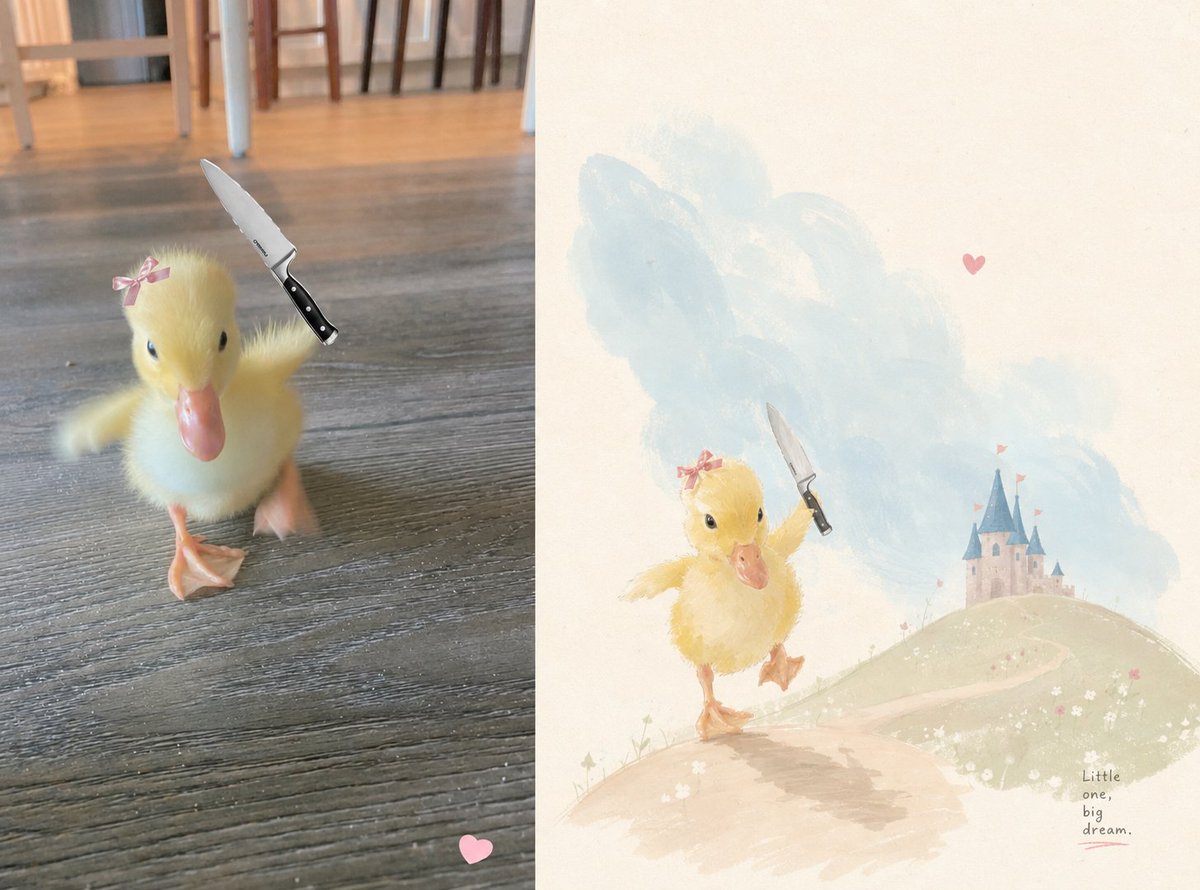
Please make each photo I upload into an independent high-end design poster, no multi-image stitching, each photo output separately. The overall composition uses a 3:4 vertical layout, following a dual-layer logic: the upper part is realistic photography, and the lower part is a hand-drawn narrative reconstruction based on core imagery and subtext.

The upper part preserves the original photo, maintaining the subject's identity, structure, posture, realistic texture, natural light and shadow, and original color atmosphere, only performing slight high-end photographic color grading to give it the feel of an art magazine, independent publication, or exhibition photography. To fit the frame, the environmental background can be naturally extended, but the subject must not be stretched, distorted, or changed.

The lower part no longer seeks to reproduce the full scene, but extracts the most recognizable subjects, outlines, postures, spatial relationships, and emotional metaphors from the photo. After understanding the original's subtext, atmosphere, and meaning, it reconstructs them into an allegorical image with a hand-drawn narrative feel. Do not fully trace the photo or mechanically copy details; instead, keep only the most essential and memorable core graphic logic, transforming complex reality into purer, more symbolic image relationships that allow one to recognize the original object while feeling the hidden emotions, memories, and meanings behind it.

The style of the lower part refers to the hand-drawn illustration quality on warm paper: the image carries innocence, metaphor, slight humor, and improvisation, like a travel allegory picture book or a private mythological map. The original photo can be appropriately imagined and reorganized, translating the real scene's subjects, environment, and details into more narrative symbolic elements; allow the original photo's emotions, relationships, or spiritual core to be re-expressed through exaggerated proportions, anthropomorphic meanings, metaphorical scenery, repeating symbols, or innocent yet clever compositions, but always centering around the same core theme without turning into a collage-style accumulation of elements.

The composition should be built on large areas of light-colored background and clear primary-secondary relationships, preserving ample white space to let it represent air, distance, quiet, and imaginative space. The subject can be concentrated in the middle-lower part or a position with more narrative tension, surrounded only by a few supporting objects, paths, plants, buildings, utensils, or symbolic signs, forming a more professional and aesthetic layout order through variations in height, depth, curved guidance, block rhythm, and positive-negative shape relationships. The image can be like 'a small piece of fantasy growing out of reality,' having both a sense of story and a restrained sense of graphic design.

The overall art style uses a clear hand-drawn graphic illustration language: it can be expressed as opaque gouache, pastel, colored pencil, crayon, acrylic, or picture-book coloring with slight paper texture, retaining soft blocks, slightly clumsy outlines, minor manual errors, and natural material feel. Lines don't need to be many but should have appropriate hand-drawn traces; forms are simplified, proportions are cute, and details are generalized, both gentle and interesting, avoiding smooth vectors, 3D plastic feel, realistic detailed tracing, and overly neat commercial illustration styles.

The color scheme follows the current logic: the overall use of soft, transparent, slightly desaturated high-end color systems, based on light backgrounds and large white spaces. Create the main atmosphere with {argument name="tones" default="light powder blue, mist blue, sky blue"}, then balance with ivory white, cream white, light beige, soft gray-green, and architectural neutrals; a small amount of {argument name="accent colors" default="blush pink, soft peach, dusty rose"} can be added as local highlights to give the image an 'ins' healing feel, breathability, and exquisite layers. Avoid dirty gray, excessive contrast, high-saturation clashing colors, and cheap vintage looks.

Text does not pre-set fixed titles, numbers, locations, or languages, nor does it create menu-style information. Based on the photo's subject, emotion, action, memory, or metaphor, freely generate a very small number of truly meaningful words, phrases, or fragments, and naturally integrate them into the white space through high-end editorial layout. The text should be small, light, restrained, and exquisite, like poetic notes or clever asides in an independent publication, forming a subtle echo with the image rather than a direct explanation.

The overall vibe should be like an independently published art travel picture book or allegorical visual manual: light-colored, white space, warm, innocent, clever, quiet, humorous, metaphorical, and improvisational, while having a clear core theme and high-end layout order. Avoid full realistic landscapes, information overload, overfilled subjects, overly solid backgrounds, template-like poster looks, e-commerce illustration styles, cartoon tropes, excessive decoration, and meaningless cuteness.
Original prompt
请将我上传的每一张照片分别制作成一张独立的高级设计海报,不多图拼接,每张照片单独输出。整体采用3:4竖版构图,延续上下双层逻辑:上半部分为真实摄影,下半部分为基于核心意象与潜台词的手绘叙事重构

上半部分保留原始照片,保持主体身份、结构、姿态、真实质感、自然光影和原有色彩氛围,仅进行轻微高级摄影调色,使其具有艺术杂志、独立出版物与展览摄影质感。为适配画幅,可自然扩展环境背景,但不得拉伸、扭曲或改变主体。

下半部分不再追求重现场景全貌,而是提取照片中最具识别性的主体、轮廓、姿态、空间关系与情绪隐喻,在理解原图潜台词、气氛和寓意之后,重构为一幅带有手绘叙事感的寓言式画面。不要完整描摹照片,也不要机械复制细节,而是只保留最本质、最值得记住的核心图形逻辑,把复杂现实转化为更纯粹、更有象征意味的图像关系,使人一眼认出原物,同时感受到它背后隐藏的情绪、记忆与意味。

下半部分的风格参考你提供的那种温暖纸面上的手绘插画气质:画面带有童真、隐喻、轻微诙谐与即兴感,像一本旅行寓言绘本或私人神话地图。可以对原图进行适度想象与重组,把真实场景中的主体、环境和细节转译为更有叙事性的象征元素;允许把原图的情绪、关系或精神内核,通过夸张比例、拟人意味、隐喻景物、重复符号或天真而聪明的构图方式重新表达,但始终围绕同一个核心主题,不变成拼贴式元素堆积。

构图应建立在大面积淡色背景与清晰主次关系之上,保留充足留白,让空白承担空气、距离、安静和想象空间。主体可集中于中下部或某个更有叙事张力的位置,周围只保留少量支撑性的景物、路径、植物、建筑、器物或象征符号,通过高低错落、远近层次、曲线引导、块面节奏与正负形关系形成更专业、更有美感的版式秩序。画面可以像“从现实中长出一小段幻想”,既有故事感,也有克制的平面设计意识。

整体画风采用手绘感明确的平面插画语言:可表现为不透明水粉、粉彩、彩铅、蜡笔、丙烯或带轻微纸纹的绘本式上色,保留柔和块面、略带笨拙的轮廓、轻微手工误差与自然材料感。线条不必太多,但应有适度手绘痕迹;形体简化、比例可爱、细节概括,既温柔又有趣,避免光滑矢量、3D塑料感、写实精描和过于工整的商业插画感。

配色延续当前逻辑:整体采用柔和、通透、略微去饱和的高级色系,并以淡色背景和大面积留白为基础。以{argument name="色调" default="浅粉蓝、雾蓝、天空蓝"}营造主氛围,再以象牙白、奶油白、浅米色、柔和灰绿、建筑中性色保持平衡;可加入少量 {argument name="装饰色" default="blush pink、soft peach、dusty rose"} 作为局部点睛,使画面更有 ins 治愈感、呼吸感与精致层次。避免脏灰、过强反差、高饱和撞色和廉价复古感。

文字不预设固定标题、编号、地点或语种,也不做菜单式信息。应根据照片的主体、情绪、动作、记忆或隐喻,自由生成极少量真正有意义的字、词、短句或片段,并通过高级编辑排版自然融入留白区域。文字应小、轻、克制、精致,像独立出版物中的诗性注记或聪明旁白,与画面形成若有若无的呼应,而不是直白解释画面。

整体气质应像一本独立出版的艺术旅行绘本或寓言式视觉手册:淡色、留白、温暖、童真、聪明、安静、诙谐、带隐喻与即兴感,同时具有清晰的核心主题和高级版式秩序。 避免完整写实风景、信息堆积、主体过满、背景过实、模板化海报感、电商插画感、卡通套路、过度装饰和无意义的可爱化处理。
Use this prompt in the VdoBloom image editor.
Opens the image editor with this prompt — add your own photo to generate.