Modern Geometric Mosaic Collage Poster
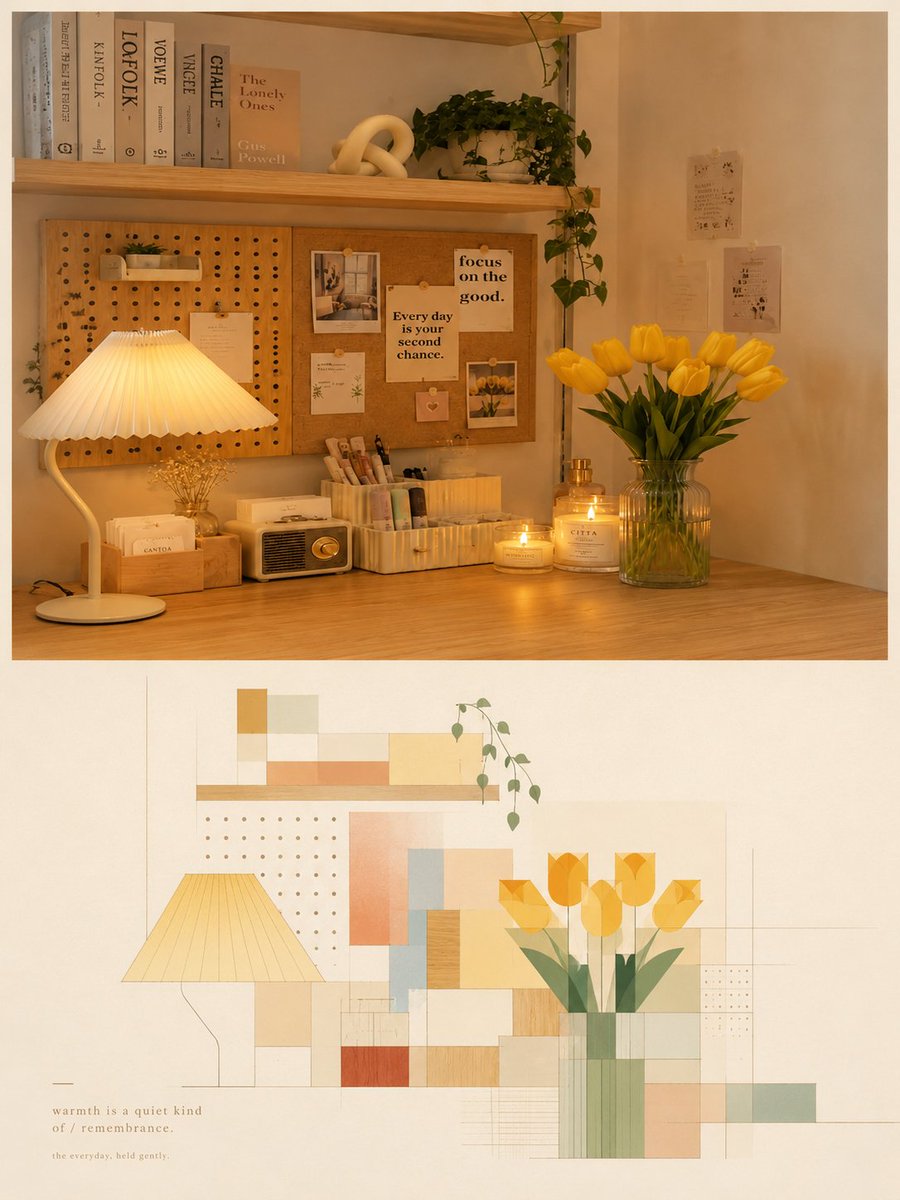
Full prompt
Create an independent high-end design poster for each photo I upload, outputting each photo separately without collaging. The overall layout uses a 3:4 vertical composition, following a dual-layer logic: the top half is realistic photography, while the bottom half is a geometric reconstruction of the original's core imagery, creating an echo between reality and memory.

The top half retains the original photo, maintaining the identity, structure, posture, real texture, natural light, and original color atmosphere of the subject. Apply only a slight professional color grade to give it the feel of an art magazine or exhibition photography. The background can be naturally extended to fit the frame, but without distorting the subject.

The bottom half extracts the most recognizable **subject, outline, posture, and narrative relationships**. Identify the core theme, visual metaphor, or aesthetic relationship of the original image, retaining only this most memorable layer for recreation. Do not fully replicate the scene or aim for realistic depiction; do not convert every object into an illustration. Actively remove irrelevant environments and fragmented information, leaving only a core subject and a minimal number of narrative-participating relationships.

The style logic uses **{argument name="reconstruction style" default="geometric composition + intelligent mosaic reorganization"}**. Compress the subject and space into clear geometric facets, rectangular units, fine-line frames, and layered grids. Reconstruct the image in a modular, architectural, or pixelated way that is carefully designed. This is not random pixelation, but intelligent induction based on the subject's structure: large shapes maintain clear outlines, while small details are translated into orderly color blocks, grid points, slices, stepped edges, and local splicing, giving the image a sense of rational decomposition like a mosaic while remaining recognizable. Axes, alignment lines, bounding boxes, and negative space partitions can be added for a high-end editorial and architectural diagram look.

The bottom half uses an **extremely light background and large areas of negative space**. The background color should match the original image's color temperature and emotion, resulting in a near-white shade that is quiet and clean. The blank space itself conveys air, distance, and breathability, making the geometric subject stand out.

The composition emphasizes **visual center of gravity, proportional relationships, negative space, modular rhythm, alignment order, and incomplete symmetry**. The subject can be offset, suspended, or placed in a low gravity area. If the most moving part of the original is a relationship—such as the scale between a person and architecture or the juxtaposition of an object and its environment—prioritize this and reinforce it with geometric blocks and mosaic structures rather than filling the frame evenly.

The color scheme follows a logic of extracting the overall color temperature and vital colors from the original, translating them into a **{argument name="palette style" default="warm, bright, and slightly naive artist's palette"}**. Use warm blocks like cream yellow, apricot, coral pink, and old rose against cool colors like sky blue and mint green for a relaxed contrast. Allow minimal visual anchors like brick red or dark green. Colors don't have to follow reality and can be swapped for rhythm, as long as the harmony is maintained. Color blocks should be flat, clean, and restrained.

Text is not preset; freely generate a tiny amount of meaningful text based on the theme, movement, or emotion of the original. Use thin, restrained, and spacious typography that echoes the geometric structure. Keep it small and quiet.

The overall temperament should be a mix of **architectural diagrams, art maps, modern collage posters, and high-end editorial design**: quiet, rational, exquisite, and modern, while retaining memory-driven refinement and color warmth. Avoid full scene replication, random pixelation, sticker logic, complex textures, smooth 3D, or cartoon templates.
Original prompt
请将我上传的每一张照片分别制作成一张独立的高级设计海报,不多图拼接,每张照片单独输出。整体采用3:4竖版构图,延续上下双层逻辑:上半部分为真实摄影,下半部分为对原图核心意象的几何化重构,上下形成现实与记忆之间的呼应。

上半部分保留原始照片,保持主体身份、结构、姿态、真实质感、自然光影和原有色彩氛围,仅进行轻微高级摄影调色,使其具有艺术杂志、独立出版物与展览摄影质感。为适配画幅,可自然扩展环境背景,但不得拉伸、扭曲或改变主体。

下半部分提取照片中最具识别性的**主体、轮郭、姿态与叙事关系**,进一步判断原图真正成立的核心主题、视觉隐喻或审美关系,只保留这一层最值得被记住的信息重新创作。不要完整复刻场景,不追求写实描摹,也不要把所有物体逐一转换成插画;主动删除无关环境与细碎信息,只留下一个核心主体及极少数真正参与叙事的关系。

样式逻辑采用**{argument name="重构样式" default="几何构成 + 智能马赛克重组"}**。将主体与空间压缩为清晰的几何块面、矩形单元、细线框架与层叠网格,用模块化、建筑化、像素化但经过设计整理的方式重构画面。不是随机像素化,而是根据主体结构智能归纳:大形体保持明确轮廓,小细节被转译成有秩序的色块、格点、切片、台阶状边缘与局部拼接关系,使画面既有马赛克般的理性分解感,又仍然一眼可辨原始主题。可适度加入局部轴线、对齐线、边界框、留白分区和少量装饰性几何细节,形成高级编辑设计与建筑图解感。

下半部分以**极度浅色背景和大面积留白**作为主要空间。背景色不固定,根据原图综合色温与情绪智能匹配为接近白色的极浅综合色,可微暖、微冷或带极轻微色相,但必须轻、净、安静。空白本身承担空气、距离和呼吸感,让几何主体更突出。

构图强调**视觉重心、比例关系、负空间、模块节奏、对齐秩序与不完全对称**。主体可偏置、悬置、落在低重心区域,或由多个几何层级向中心聚合;若原图最动人的地方是一种关系——例如人与建筑的尺度、物与环境的并置、局部结构之间的呼应——应优先保留这种关系,并用几何分块和马赛克结构加以强化,而不是平均铺满画面。

配色保持你当前喜欢的逻辑:从原图提炼综合色温和最具有生命力的颜色,再转译成一种**{argument name="色盘风格" default="温暖、明快、略带稚拙感的艺术家色盘"}**。整体以奶油黄、杏色、粉橘、珊瑚粉、旧玫瑰等温暖色块,与天空蓝、浅青绿、薄荷绿、灰绿等清凉色形成松弛的冷暖碰撞;允许极少量砖红、橙红、深绿、土褐或黑色作为视觉锚点。颜色不必完全服从真实物体,可根据画面节奏进行局部换色、错色和跳色,但必须保持整体和谐。色块应平涂、干净、克制,避免脏灰、统一滤镜感和高饱和数字色。

文字不预设固定标题、地点、编号或语种,根据原图的主题、动作、环境、情绪或隐喻自由生成极少量真正有意义的文字。文字可作为版式系统的一部分,置于留白区、底部中心、边角或几何分区之间,使用细瘦、克制、疏朗的排版方式,与几何结构形成呼应;整体保持小、轻、安静,不机械套模板。

整体气质应像**建筑图解、艺术地图、现代拼贴海报与高级编辑设计**之间的结合:安静、理性、精致、现代,同时保留记忆化提炼与色彩温度。避免完整场景复刻、随机像素化、贴纸逻辑、繁复纹理、光滑3D、卡通模板感和为了丰富而加入无意义元素。
Use this prompt in the VdoBloom image editor.
Opens the image editor with this prompt — add your own photo to generate.