Narrative Collage Aesthetic Layout
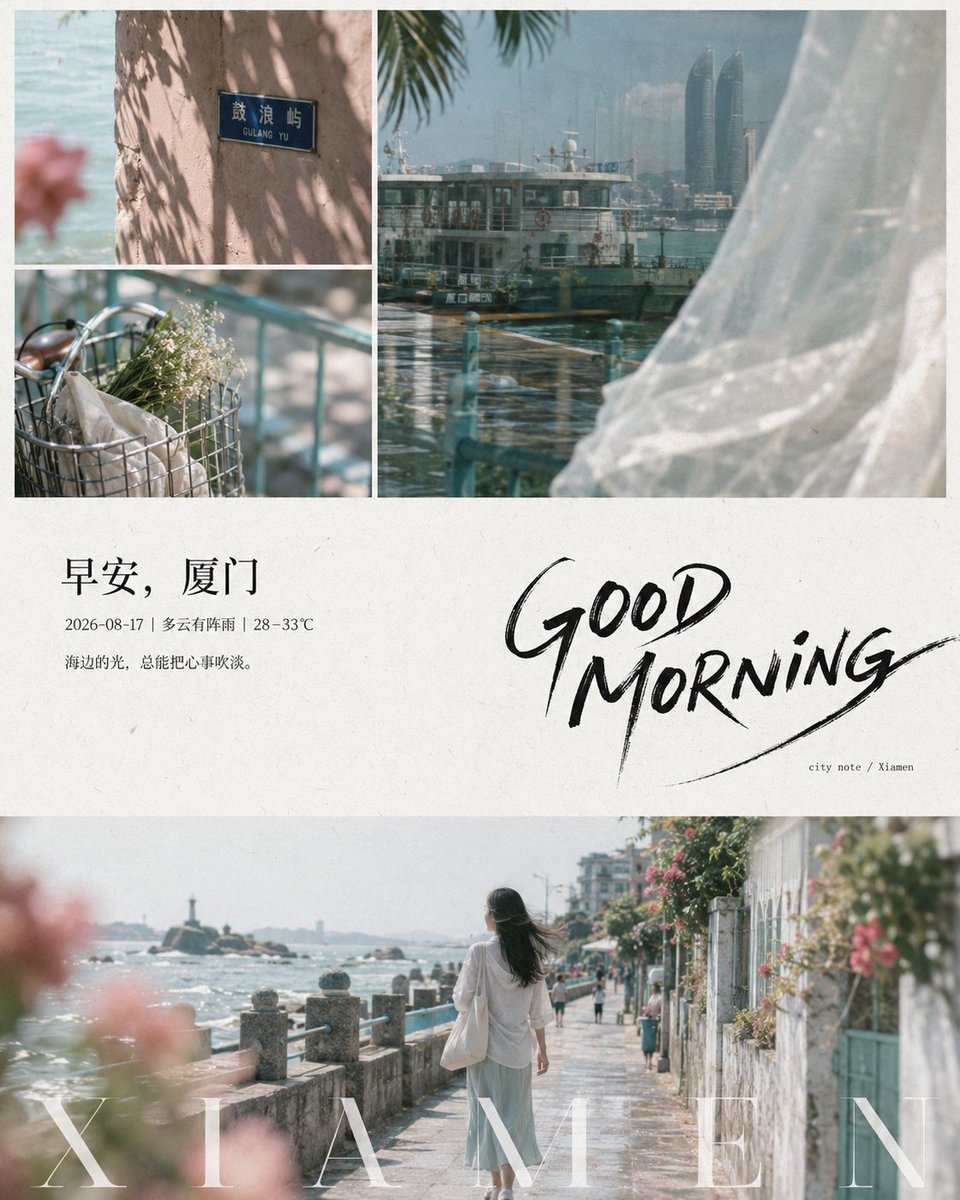
Full prompt
Provided with characters, environments, objects, dates, and short sentences by the future theme, and assigning them into a narrative of 'local perception—white space pause—complete entry': the first glance must be two sets of soft images at the top and bottom sandwiching a large block of paper white, with a small amount of black text in the middle forming a quiet but distinct editorial pause. The upper part uses an asymmetric three-grid collage, with two close-up fragments stacked on one side and a larger immersive local part on the other; bold cropping allows the subject to be obscured by edges, foreground silhouettes, or repeating small shapes, building an atmosphere with scattered sensations. The lower part uses a wide main scene to carry the theme, with the character or core object facing away, sideways, or in motion, not posed, retaining sufficient environment and foreground bokeh to make viewing feel like a chance record. The central paper white maintains loose breathing: the top left features two levels of short sentences, the main sentence being restrained book body text, and the secondary sentence smaller, lighter, and with tight line spacing; the bottom right features an oversized free-writing title, creating a sense of gesture with variations in thickness, slightly dry-brush edges, open letter counters, loose connections, long tail strokes, and diagonal stretching, accompanied by a few small annotations and quotation marks or emphasis symbols compatible with the target text's orthography. Regardless of the writing system, identifiable glyphs are maintained along their natural reading direction; connected writing must not be forcibly broken, and spaced writing can use density variations to establish rhythm. A line of formal high-contrast display text is overlaid on the edge of the bottom image, translucent or engulfed by highlights; text that allows letter-spacing uses wide spacing, while text that cannot be split uses word spacing, line length, and weight to gain equal airiness. The imagery is unified in a light film tone of natural daylight, yellow-green, and low-saturation cyan, with milky white highlights, low contrast, and fine grain; real depth of field provides foreground soft focus and light mist; the white background retains very light paper fibers, printing gray marks, and a sense of incomplete cleanliness. Use white narrow divider lines to connect the photo collage and the paper surface, letting the softness of photography and the decisiveness of black handwriting elevate each other. Avoid commercial-grade sharpening, vibrant filters, perfect centering, average column division, excessive decoration, fake aging, strong gradients, or plastic-like skin smoothing.
Original prompt
由未来主题提供人物、环境、物件、日期与短句内容,并将其分配为“局部感知—留白停顿—完整进入”的叙事:第一眼必须是上下两组柔和影像夹住大块纸白,中段以少量黑字形成安静但鲜明的编辑性停顿。上部采用不对称三格拼贴,一侧叠放两个近景碎片,另一侧放较大的沉浸式局部;裁切大胆,让主体被边缘、前景虚影或重复小形遮挡,以零散触觉先建立气氛。下部用宽阔主场景承接主题,人物或核心对象背向、侧向或处于行动途中,不摆拍,保留充足环境与前景散景,使观看像偶然记录。中央纸白保持宽松呼吸:左上放两级短句,主句为克制的书刊正文,次句更小、更浅、行距紧凑;右下放一句超大的自由书写标题,以粗细跳变、略带枯笔的边缘、开放字腔、松散连接、长收笔和斜向伸展制造手势感,配少量小号注释及与目标文字正字法相容的引号或强调符号。无论目标文字为何种书写系统,都沿其自然阅读方向保持可辨识字形;连写文字不得强拆连接,间隔文字可用疏密变化建立节奏。底部影像边缘叠加一行正式高反差展示字,轻透或被亮部吞没;允许字距的文字采用宽字距,不允许拆分的文字则用词间距、行长和细重获得同等空气感。影像统一为自然日光、黄绿与低饱和青色的清淡胶片调子,亮部奶白、反差偏低、颗粒细微,前景柔焦与轻雾来自真实景深;白底保留极轻纸纤维、印刷灰痕和不完全洁净感。用白色窄隔线连接照片拼贴与纸面,使摄影的柔软和黑色手写的果断互相抬升。避免商业级锐化、浓艳滤镜、完美居中、平均分栏、过度装饰、假做旧、强渐变、塑料般磨皮,也不要
Use this prompt in the VdoBloom image editor.
Opens the image editor with this prompt — add your own photo to generate.