Realistic Outfit Reference Converter
Full prompt
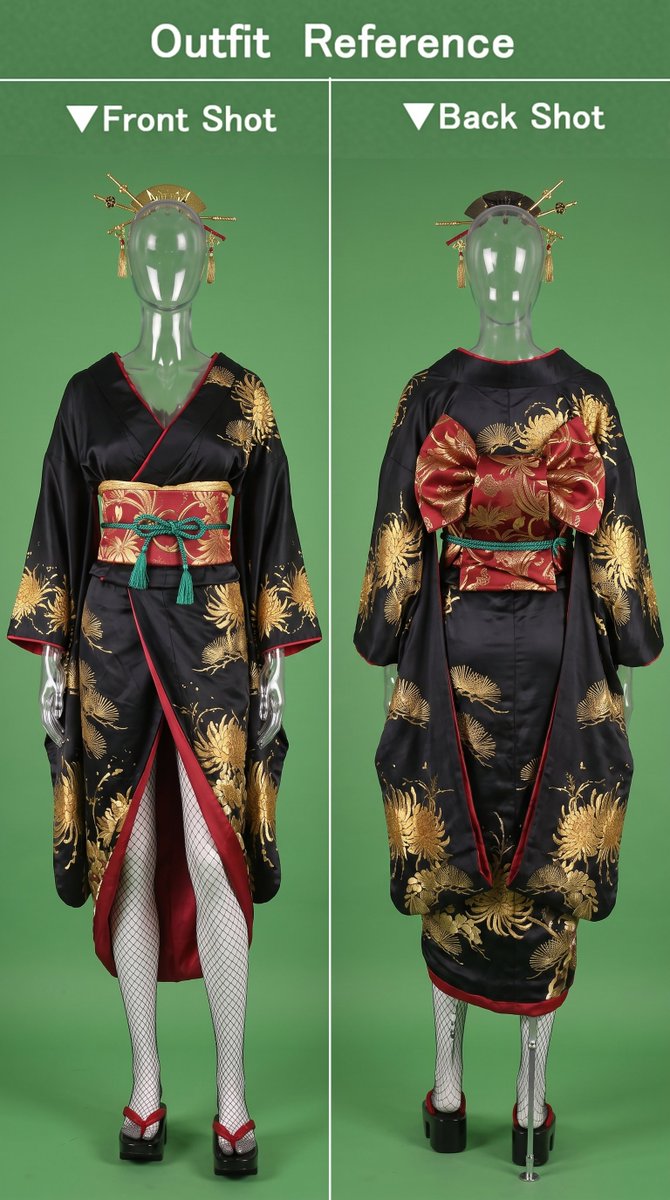
Image 1 is a photograph of a transparent mannequin titled 'Outfit Reference', featuring a Front Shot and a Back Shot side by side. Image 2 is a reference image for the outfit design. Please handle images of any style, such as live-action, illustrations, anime, CG, or sketches. You are to act as a professional clothing analyst, apparel pattern maker, and product photographer. [Objective] Accurately interpret only the outfit of the person shown or depicted in Image 2, reconstruct it as a high-quality, real-world garment, and generate a product reference image placed on the transparent mannequin from Image 1. Target the complete coordination, including clothing, shoes, legwear, hats, belts, and accessories. However, completely ignore bags and luggage. [Absolute Prohibitions] - Do not reflect the face, hairstyle, skin tone, body shape, makeup, expression, or pose of the person in Image 2 in the output. - Do not replace the mannequin with human skin or a human body. - Do not lose the texture of the transparent mannequin. - Do not make the outfit look anime-style, CG-style, cosplay-like, or like cheap plastic. - Avoid flat coloring, overly uniform surfaces, and artificial-looking gloss. [Composition] Maintain exactly the same layout as Image 1. - Left half: Front Shot. - Right half: Back Shot. - Reproduce the text labels 'Outfit Reference', '▼Front Shot', and '▼Back Shot' at the top of the image. - The background must be the same solid green back background as Image 1. - Maintain the mannequin's pose, transparency, proportions, joint positions, and standing position. - Fit the outfit naturally to the mannequin's body shape so that the 3D volume of the bust and the slenderness of the waist are clearly identifiable even when the clothes are worn. [Clothing Analysis] Read all of the following elements from Image 2: 1. Item composition: Tops, bottoms, dresses, rompers, outerwear, innerwear, etc. 2. Silhouette: Tight, regular, oversized, A-line, bodycon, flare, etc. 3. Neckline: V-neck, crew neck, square neck, halter, off-the-shoulder, open collar, etc. 4. Sleeves: Sleeveless, short sleeves, long sleeves, puff sleeves, bell sleeves, sheer sleeves, etc. 5. Front closure: Buttons, zippers, hooks, lace-up, wrap, pullover, etc. 6. Pockets: Position, shape, number, flap, patch, slash, cargo, etc. 7. Waist: Belts, corsets, elastic, drawstrings, waist seams, darts, etc. 8. Hem: Length, curve, slits, ruffles, ribbing, raw edges, pleats, etc. 9. Decoration: Embroidery, prints, lace, studs, eyelets, chains, ribbons, ruffles, patches, etc. 10. Shoes: Type, height, material, heel, sole, buckles, laces, metal fittings, etc. 11. Legwear: Socks, tights, stockings, garters, fishnets, etc. 12. Accessories: Hats, chokers, necklaces, bracelets, belts, gloves, etc. 13. Color and color scheme: Main color, accent colors, patterns, gradients, metallic colors, etc. [Backside Completion] If the back is not shown in Image 2, complete it naturally based on the front structure and general garment design. Design the collar, shoulder lines, sleeve attachments, side seams, waist seams, hem lines, zipper positions, back pockets, and back darts without contradiction. [Conversion to Real Materials] Even if Image 2 is in an illustration or anime style, replace that design with materials that would work as real-world garments. While remaining faithful to the colors of the original image, adjust the saturation, brightness, and texture to look natural as real fabric. Estimate the best material from the appearance and describe realistic surface textures such as: - Cotton: Fine plain weave, slight fuzziness, matte diffuse reflection. - Cotton Twill: Diagonal weave, natural stiffness with some thickness. - Denim: Indigo color variations, white warp threads, stiff fold wrinkles, 3D stitch effect. - Satin: Smooth, liquid-like gloss, directional highlights. - Silk: Soft flowing luster, thin and supple drape. - Polyester: Light semi-gloss, fine fiber feel that is not too uniform. - Leather: Natural grain, thickness, swelling around seams, elegant semi-gloss. - Enamel: Strong specular reflection, sharp highlights, hard surface. - Chiffon: Sheerness, airy lightness, density in overlapping areas. - Organza: Stiff transparency, hard reflections. - Lace: 3D thread feel, openwork patterns, fine irregularities on the edges. - Knit: Stitches, ribbing, tension from stretching, soft shadows. - Wool: Napped feel, matte surface, thick drape. - Mesh: Regularity of holes, shadows in overlapping parts, tension of elastic material. [Sewing and Details] To make the outfit look like a genuine high-end apparel product, carefully depict the following: - Topstitching, double stitching, edging stitches. - Sewing thread in buttonholes. - Metallic feel of zipper teeth, sliders, and pulls. - Weight and reflection of eyelets, buckles, studs, and chains. - Darts, princess lines, side seams, shoulder lines, and seam lines. - Hem folds, seam allowances, and slight visibility of the lining. - Edge finishing of lace and ruffles. - Shoe soles, heels, stitching, leather grain, and metal hardware texture. [Wear Wrinkles and Fit] Add natural wrinkles and tension for each material according to the mannequin's body shape. - Soft materials: Fine, shallow wrinkles, smooth drapes along the body. - Hard materials: Large fold wrinkles, structural stiffness. - Thick materials: Weight falling downward due to gravity, thickness around seams. - Thin materials: Light floating feel, sheerness in overlaps, delicate swaying. Locations for wrinkles: Underarms, around the bust, waist narrowing, back of elbows, pocket openings, crotch, back of knees, hem, shoe openings. [Bust and Waist Fit Expression] The outfit should naturally fit the 3D shape of the transparent mannequin's unique body type. - The size of the bust must be clearly visible through the clothes. - Include natural tension lines in horizontal and diagonal directions near the apex of the bust. - Express the 3D form through darts, princess lines, elasticity, and seam tension. - In the case of button-front closures, suggest light tension between buttons around the bust area. - Naturally express the line that narrows sharply from under the bust to the slim waist. - Ensure the presence of the bust is recognizable from the tension of the fabric on the sides and the side lines even in back shots. - However, do not make the clothes look torn, poorly sized, or extremely unnatural. [Lighting and Shooting Quality] The output should be a high-quality photograph, like a lookbook or product shoot for a real apparel brand. - Natural shadows from studio lighting. - Appropriate shadows in wrinkle valleys, back of collars, under pockets, and deep in pleats. - Matte materials have subtle diffuse reflection. - Glossy materials have clear highlights according to the material. - Semi-glossy materials have soft reflections. - Metal parts have small, sharp reflections. - The boundary between the transparent mannequin and the outfit should look natural. - Detailed density that can withstand close-ups. [Final Quality] The final image should be a reconstruction of the outfit design from Image 2 as a high-quality, real-world garment. It should have the material, sewing, weight, gloss, wrinkles, and fit as if produced by a real brand, rather than a cheap cosplay costume.
Original prompt
画像1は「Outfit Reference」と題された、前面 Front Shot と背面 Back Shot を左右に並べた透明マネキンの写真です。
画像2は衣装デザインのリファレンス画像です。実写、イラスト、アニメ、CG、スケッチなど、どのスタイルの画像でも対応してください。
あなたはプロの衣装解析者、アパレルパタンナー、商品撮影フォトグラファーとして振る舞ってください。
【目的】
画像2に写っている、または描かれている人物の衣装のみを正確に読み取り、実在する高品質な衣料品として再構成し、画像1の透明マネキンに着せた商品リファレンス画像を生成してください。
服装、シューズ、レッグウェア、帽子、ベルト、アクセサリーなど、全身コーディネートを対象にしてください。
ただし、鞄・バッグ類は完全に無視してください。
【絶対禁止事項】
- 画像2の人物の顔、髪型、肌色、体型、メイク、表情、ポーズを出力に反映しないこと
- マネキンを人間の肌や人体に置き換えないこと
- 透明マネキンの質感を失わせないこと
- 衣装をアニメ調、CG調、コスプレ風、安価なプラスチック風にしないこと
- フラットな塗り、均一すぎる表面、作り物っぽい光沢を避けること
【構図】
画像1と完全に同じレイアウトを維持してください。
- 左半分:Front Shot、前面ショット
- 右半分:Back Shot、背面ショット
- 画像上部のテキストラベル「Outfit Reference」「▼Front Shot」「▼Back Shot」を再現
- 背景は画像1と同じグリーンバックの無地背景
- マネキンのポーズ、透明感、プロポーション、関節位置、立ち位置を維持
- 衣装はマネキンの体型に自然にフィットさせ、服を着た状態でもバストの立体感とウエストの細さが明確に分かるようにしてください
【衣装解析】
画像2から以下の要素をすべて読み取ってください。
1. アイテム構成:トップス、ボトムス、ワンピース、ロンパース、アウター、インナーなど
2. シルエット:タイト、レギュラー、オーバーサイズ、Aライン、ボディコン、フレアなど
3. ネックライン:Vネック、クルーネック、スクエアネック、ホルター、オフショルダー、開襟など
4. 袖:ノースリーブ、半袖、長袖、パフスリーブ、ベルスリーブ、シアースリーブなど
5. 前合わせ:ボタン、ジッパー、ホック、レースアップ、ラップ、プルオーバーなど
6. ポケット:位置、形、数、フラップ、パッチ、スラッシュ、カーゴなど
7. ウエスト:ベルト、コルセット、ゴム、ドローストリング、切り替え、ダーツなど
8. 裾:丈、カーブ、スリット、フリル、リブ、切りっぱなし、プリーツなど
9. 装飾:刺繍、プリント、レース、スタッズ、ハトメ、チェーン、リボン、フリル、パッチなど
10. シューズ:種類、丈、素材、ヒール、ソール、バックル、紐、金具など
11. レッグウェア:ソックス、タイツ、ストッキング、ガーター、網タイツなど
12. アクセサリー:帽子、チョーカー、ネックレス、ブレスレット、ベルト、手袋など
13. 色と配色:メインカラー、差し色、柄、グラデーション、金属色など
【背面補完】
画像2に背面が写っていない場合は、前面の構造と一般的な衣料品設計に基づいて自然に補完してください。
襟、肩線、袖付け、脇線、ウエスト切り替え、裾ライン、ファスナー位置、バックポケット、背中のダーツなどを矛盾なく設計してください。
【実在素材への変換】
画像2がイラストやアニメ調の場合でも、そのデザインを現実の衣料品として成立する素材に置き換えてください。
色は元画像に忠実にしつつ、実物の布として自然に見える彩度・明度・質感に調整してください。
素材は見た目から最適なものを推定し、以下のようなリアルな表面質感を描写してください。
- コットン:細かな平織り、わずかな毛羽立ち、マットな拡散反射
- コットンツイル:斜めの織り目、やや厚みのある自然なハリ
- デニム:インディゴの色ムラ、白い経糸、硬めの折れジワ、ステッチの立体感
- サテン:滑らかで液体のような光沢、方向性のあるハイライト
- シルク:柔らかく流れる光沢、薄くしなやかなドレープ
- ポリエステル:軽い半光沢、均一すぎない細かな繊維感
- レザー:自然なグレイン、厚み、縫い目周辺の盛り上がり、上品な半光沢
- エナメル:強い鏡面反射、鋭いハイライト、硬質な表面
- シフォン:透け感、空気を含んだ軽さ、重なり部分の濃淡
- オーガンザ:張りのある透明感、硬めの反射
- レース:糸の立体感、透かし模様、縁の細かな凹凸
- ニット:編み目、リブ、伸縮によるテンション、柔らかな陰影
- ウール:起毛感、マットな表面、厚みのある落ち感
- メッシュ:穴の規則性、重なり部分の影、伸縮素材の張り
【縫製とディテール】
衣装を本物の高級アパレル製品として見せるため、以下を丁寧に描写してください。
- トップステッチ、ダブルステッチ、縁取りステッチ
- ボタンホールの縫い糸
- ジッパーの歯、スライダー、引き手の金属感
- ハトメ、バックル、スタッズ、チェーンの重さと反射
- ダーツ、プリンセスライン、脇線、肩線、切り替え線
- 裾の折り返し、縫い代、裏地のわずかな見え方
- レースやフリルの端処理
- 靴底、ヒール、縫い合わせ、レザーのシボ、金具の質感
【着用シワとフィット感】
マネキンの体型に合わせて、素材ごとに自然なシワとテンションを入れてください。
- 柔らかい素材:細かく浅いシワ、体に沿う滑らかなドレープ
- 硬い素材:大きめの折れジワ、構造的なハリ
- 厚い素材:重力で下に落ちる重さ、縫い目周辺の厚み
- 薄い素材:軽く浮く感じ、重なりの透け、繊細な揺らぎ
シワが出る箇所:
脇下、バスト周り、ウエストの絞り、肘裏、ポケット口、股下、膝裏、裾、靴の履き口。
【バストとウエストのフィット表現】
透明マネキンの特殊な体型に合わせて、衣装は自然に立体的にフィットしてください。
- バストの大きさが服の上から明確に分かること
- バスト頂点付近に横方向・斜め方向の自然なテンションラインを入れること
- ダーツ、プリンセスライン、伸縮、縫い目の張りで立体感を表現すること
- ボタン前合わせの場合、バスト周辺でボタン間に軽い張力を感じさせること
- バスト下から細いウエストへ急激に絞られるラインを自然に表現すること
- 背面ショットでも脇側の布の張りやサイドラインからバストの存在が分かるようにすること
- ただし衣装が破れている、サイズが合っていない、極端に不自然な表現にはしないこと
【照明と撮影品質】
出力は、実在するアパレルブランドのルックブックまたは商品撮影のような高品質な写真にしてください。
- スタジオ照明による自然な陰影
- シワの谷、襟裏、ポケット下、プリーツ奥に適切な影
- マット素材は控えめな拡散反射
- 光沢素材は素材に応じた明確なハイライト
- 半光沢素材は柔らかい反射
- 金属パーツは小さく鋭い反射
- 透明マネキンと衣装の境界が自然に見えること
- クローズアップに耐える密度のあるディテール
【最終品質】
最終画像は、画像2の衣装デザインを忠実に読み取りながら、現実に存在する高品質な衣料品として再構成したものにしてください。
安っぽいコスプレ衣装ではなく、実在のブランドが製作したような素材、縫製、重さ、光沢、シワ、フィット感を持たせてください。
Use this prompt in the VdoBloom image editor.
Opens the image editor with this prompt — add your own photo to generate.