Retro Geometric Cultural Poster
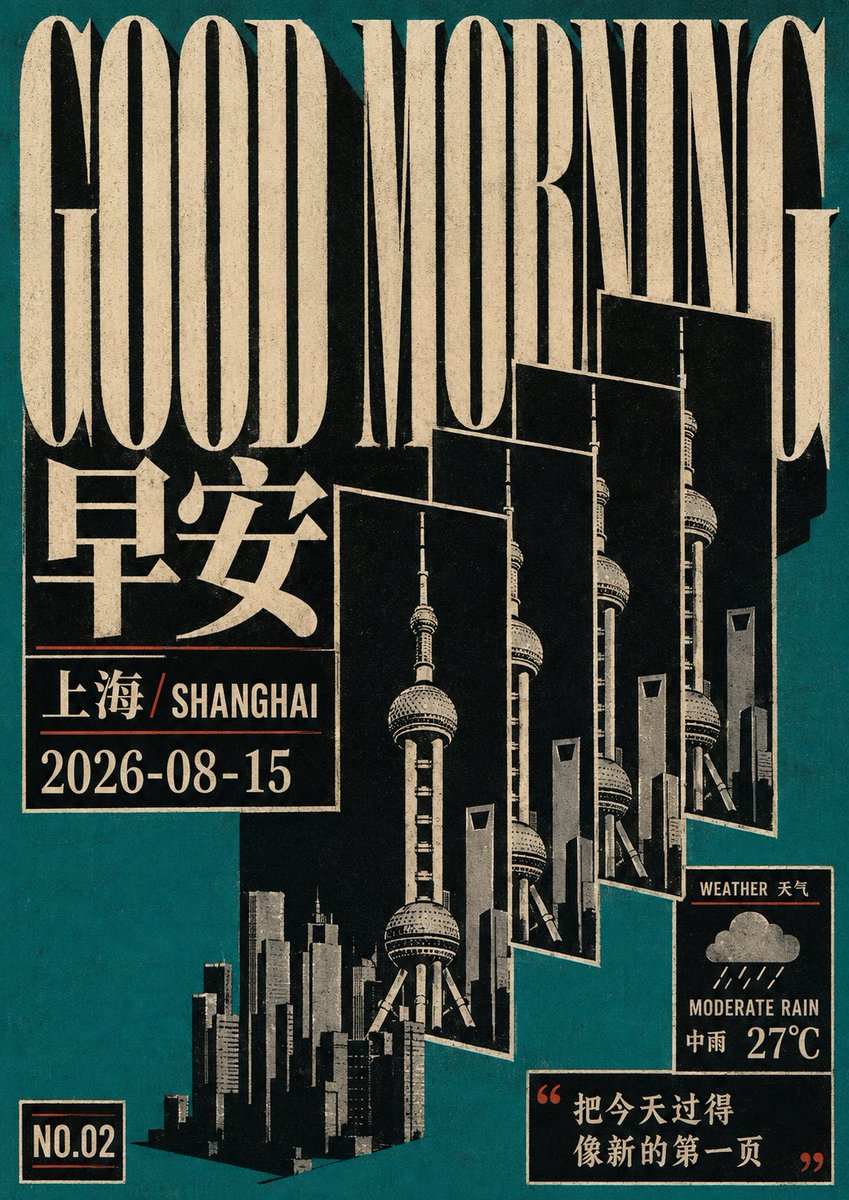
Full prompt
Construct {argument name="subject" default="any futuristic theme"} into a black-background, strongly flattened retro cultural poster: at first glance, see a large-scale high-contrast {argument name="title" default="headline"} and a group of {argument name="thematic graphics" default="thematic graphics"} repeating along depth and misaligned layer by layer. The text and images together form an oppressive black-and-white geometric composition rather than independent information zones. Carry heavy warm white characters on a near-pure black background, using a small amount of dark reddish-brown or old gold only for thin horizontal lines, explanatory text, and slight emphasis; let the main title occupy the primary visual weight at the top. Information is divided into several nested cards with black backgrounds and white borders, interspersed with thematic objects along diagonal or stepped paths, creating a spatial rhythm like printed layouts being continuously copied, ghosted, or misprinted. The subject of the futuristic theme should be disassembled into repeatable outlines, borders, or stacked slices, sharing the same hard-edged ink logic with cards, titles, and thin lines, forming a relationship of mutual blocking, interspersing, and nesting. The glyphs adopt a high-contrast, narrow, and carved construction: the main strokes are heavy, the horizontal and vertical strokes have obvious thickness contrast, the endpoints are sharp or slightly irregular, the turns are hard, and the inner chambers are narrow but maintain long-distance recognition; regardless of how the text system changes, maintain tight letter spacing, strong line spacing contrast, and a reading beat from large titles to small annotations, letting punctuation, stress marks, or other textual marks follow the overall geometric axis. The images retain only a few forms that can support theme identification, using layers of black, gray, and warm white with tough outlines, adding no soft gradients, commercial-grade polishing, or decorative details. Retain restrained traces of low-resolution reproduction, slight misalignment, rough edges, local uneven inking, and old printing, but do not create severe damage out of thin air; the whole must look like a graphic system completed by limited ink, repeated screens, and manual typesetting.
Original prompt
将{argument name="主题" default="任何未来主题"}构造成一张黑底、强烈平面化的复古文化海报:第一眼先看到大尺度高对比{argument name="标题" default="标题"}与一组沿深度重复、逐层错位的{argument name="主题图形" default="主题图形"},文字和图像共同形成压迫性的黑白几何构图,而不是各自独立的资讯区。以近乎纯黑背景承载厚重暖白字,少量暗红棕或旧金色只用于细横线、说明文字和微弱强调;让大标题占据上方主要视觉重量,信息分成数个黑底白框的嵌套卡片,沿斜向或阶梯式路径穿插主题物件,制造像印刷版面被连续复制、拖影、错版的空间节奏。未来主题的主体应被拆成可重复的轮廓、边框或层叠切片,与卡片、标题、细线共享同一种硬边油墨逻辑,形成图文互相遮挡、穿插、嵌套的关系。字形采用高对比、窄长而有雕刻感的构造:主干厚重,横竖笔画有明显粗细反差,端点锐利或略带不规则切角,转折坚硬,内腔狭窄但保持远距离识别;无论文字系统如何变化,都维持紧密字距、强烈行距对比、由大块标题到细小注释的阅读节拍,并让标点、重音符号或其他文字标记服从整体几何轴线。图像只保留能支撑主题识别的少量形体,使用黑、灰、暖白的层次和硬朗轮廓,不添加柔和渐变、商业级润色或装饰性细节。保留低清复制、轻微错位、边缘毛糙、局部墨色不均与旧印刷的克制痕迹,但不要凭空制造严重破损;整体必须像一套由有限油墨、重复网版和手工排版共同完成的平面系统。
Use this prompt in the VdoBloom image editor.
Opens the image editor with this prompt — add your own photo to generate.