Rubber Stamp Travel Field Notes
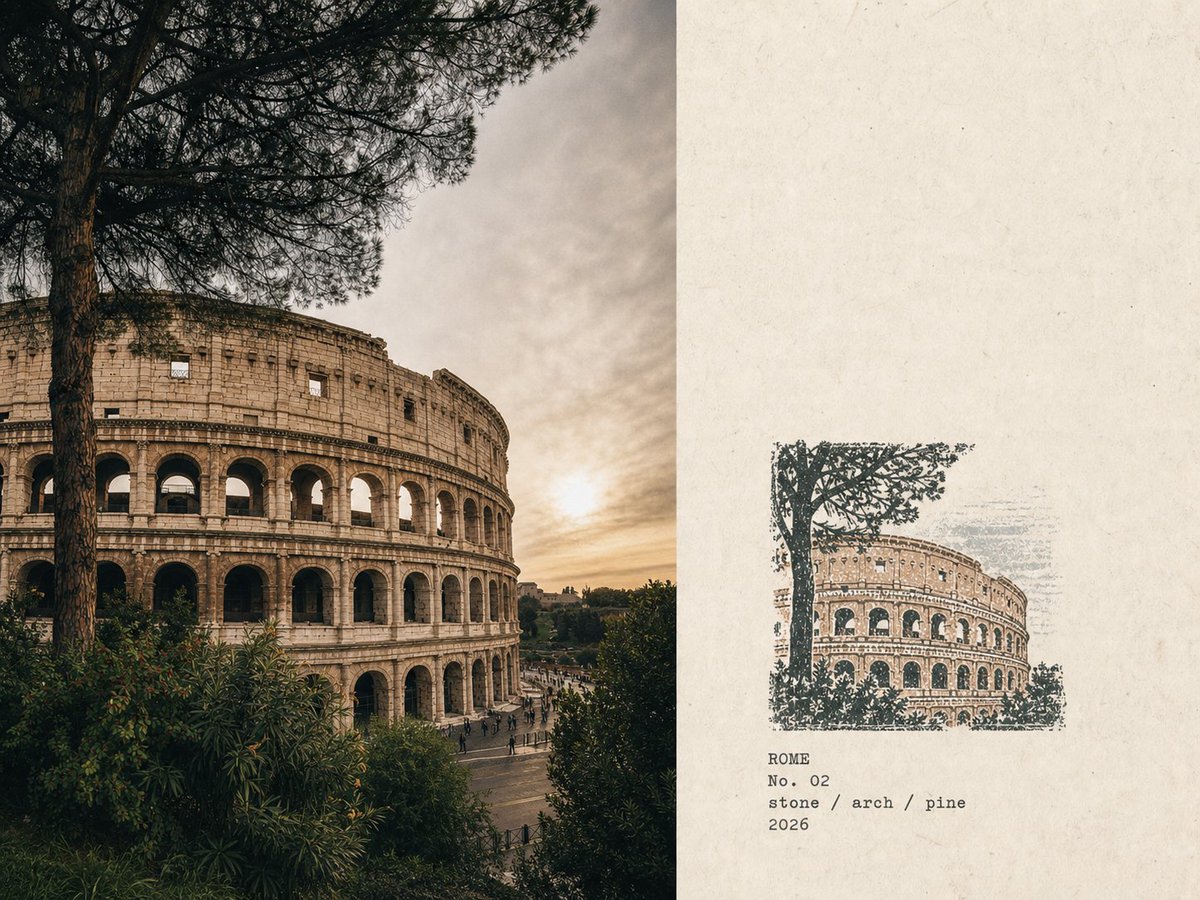
Full prompt
Please turn every photo I upload into an independent 'Rubber Stamp Travel Field Notes Poster', outputting each photo separately without any multi-photo collage. The overall composition uses a 4:3 landscape layout, dividing the image into left and right areas without drawing obvious dividing lines. The left side accounts for about 58% of the image, faithfully preserving the original photo. Accurately maintain the identity of the subject, terrain, buildings, plants, people, spatial relationships, natural light and shadow, real texture, and original color atmosphere, performing only restrained art-publication-grade photographic color grading and adding extremely slight fine film grain. Natural cropping is allowed to fit the layout, but do not stretch, distort, move, replace, or redraw the subject. The right side accounts for about 42% of the image, using warm off-white old paper as a background. The paper has subtle fibers, natural grains, slight usage marks, and a matte touch, while retaining large areas of unprinted white space, making the blankness an important part of the layout. Analyze the original photo to extract the most recognizable subject outlines, architectural structures, terrain trends, plant postures, roads, shorelines, or other key visual relationships, and compress them into a small multi-color rubber stamp image. Do not copy all the contents of the photo item by item. Only keep the minimum information necessary to allow the original location, subject, and scene relationship to be recognized at a glance. Remove crowds, vehicles, dense windows, repetitive buildings, fine vegetation, decorative components, and irrelevant backgrounds. The stamp is located in the lower-middle part of the paper area on the right, occupying only about 30%-38% of the height of the right area, with sufficient white space reserved around it. The stamp must not be enlarged into a regular illustration, a full landscape painting, or a brand logo. Determine the organization of the stamp based on the composition of the original photo: - Iconic buildings: Keep the most recognizable outer outlines, roofs, domes, arches, towers, or main structures. - Mountain settlements: Compress buildings into a small number of stepped color blocks arranged along the terrain. - Coastal scenery: Keep the mountain trends, settlement levels, shorelines, and a few intermittent water ripples. - Urban vistas: Keep the main skyline, one iconic building, and one or two layers of distant mountains. - Natural landscapes: Keep the directional relationship of main mountains, trees, shorelines, or roads. - Close-up obstructions: If important to the original photo's narrative, they can be kept as foreground stamp outlines. Extract 2-4 spot color inks from the original photo. Prioritize desaturated colors like carbon black, dark green, brick red, ocher yellow, gray-blue, and taupe, but do not force a fixed color palette. Retain the most recognizable color character of the original photo, allowing only a small area of color as visual emphasis. Each color should be presented as a separate hand-stamped effect: real rubber stamp carving texture, manual cut marks, uneven hatching, outline gaps, broken edges, dry ink shortage, paper transparency, granular ink, uneven pressure, partial ghosting, and a slight color registration offset of about 1-2 mm. Natural misalignment between different color layers is allowed, and edges cannot be digitally smoothed. The imprint should look like a real rubber stamp pressed on old paper, not a filtered photo, smooth vector illustration, or line-art logo. Generate text based on the location, theme, and visual imagery in the photo: English Name of Location, No. Serial Number, Three short English keywords, Anno Domini Year. Place the text below the stamp or in the adjacent white space, using a small, restrained, and slightly...
Original prompt
请将我上传的每一张照片分别制作成一张独立的「橡皮章旅行田野笔记海报」,每张照片单独输出,不要多图拼贴。 整体采用4:3横版构图,将画面划分为左右两个区域,但不要绘制明显的分隔线。 左侧约占画面58%,忠实保留原始照片。准确保持主体身份、地形、建筑、植物、人物、空间关系、自然光影、真实质感和原有色彩氛围,仅进行克制的艺术出版物级摄影调色,并加入极轻微的细腻胶片颗粒。为适配版式可以自然裁切,但不得拉伸、扭曲、移动、替换或重新绘制主体。 右侧约占画面42%,使用温暖的米白色旧纸作为背景。纸张具有细微纤维、天然颗粒、轻微使用痕迹和哑光触感,同时保留大面积未经印刷的纸张留白,让空白成为版式的重要组成部分。 分析原始照片,从中提取最具地点辨识度的主体轮廓、建筑结构、地形走势、植物姿态、道路、水岸线或其他关键视觉关系,将其压缩成一枚小型多色橡皮章图像。 不要逐项复制照片中的全部内容。只保留能够让人一眼认出原始地点、主体和场景关系所必需的最少信息。删除人群、车辆、密集窗户、重复建筑、细碎植被、装饰构件和无关背景。 章印位于右侧纸张区域的中下部,整体只占右侧区域高度的约30%—38%,周围必须保留充足留白。章印不能放大成普通插画、完整风景画或品牌Logo。 根据原图构图决定章印的组织方式: - 标志性建筑:保留最有辨识度的外轮廓、屋顶、穹顶、拱门、塔楼或主要结构。 - 山地聚落:将建筑压缩成沿地形排列的少量阶梯状色块。 - 海岸风景:保留山体走势、聚落层级、岸线和少量断续水纹。 - 城市远景:保留主要天际线、一个标志性建筑及一两层远山。 - 自然景观:保留主要山体、树木、水岸或道路的方向关系。 - 近景遮挡物:如果其对原图叙事重要,可作为前景章印轮廓保留。 从原始照片中提取2—4种专色油墨。优先使用炭黑、深绿、砖红、赭黄、灰蓝、灰褐等经过降低饱和度的颜色,但不得强行套用固定色盘。保留原照片最有辨识度的色彩性格,仅允许一个小面积颜色作为视觉强调。 每一种颜色都要呈现为分别手工盖印的效果: 真实橡皮章雕刻纹理、手工刻痕、粗细不均的排线、轮廓缺口、断裂边缘、干燥缺墨、纸张透底、颗粒状油墨、压力不均、局部重影,以及约1—2毫米的轻微套色偏移。 不同色层之间允许出现自然错位,边缘不能数字化平滑。印迹应像真正刻制后压在旧纸上的橡皮章,而不是套用滤镜的照片、平滑矢量插画或线稿Logo。 根据照片中的地点、主题和视觉意象生成文字: 地点英文名称 No. 编号 三个简短英文关键词 西元年份 文字放在章印下方或邻近留白处,使用小型、克制、略带…
Use this prompt in the VdoBloom image editor.
Opens the image editor with this prompt — add your own photo to generate.