Travel Observation Archive Poster
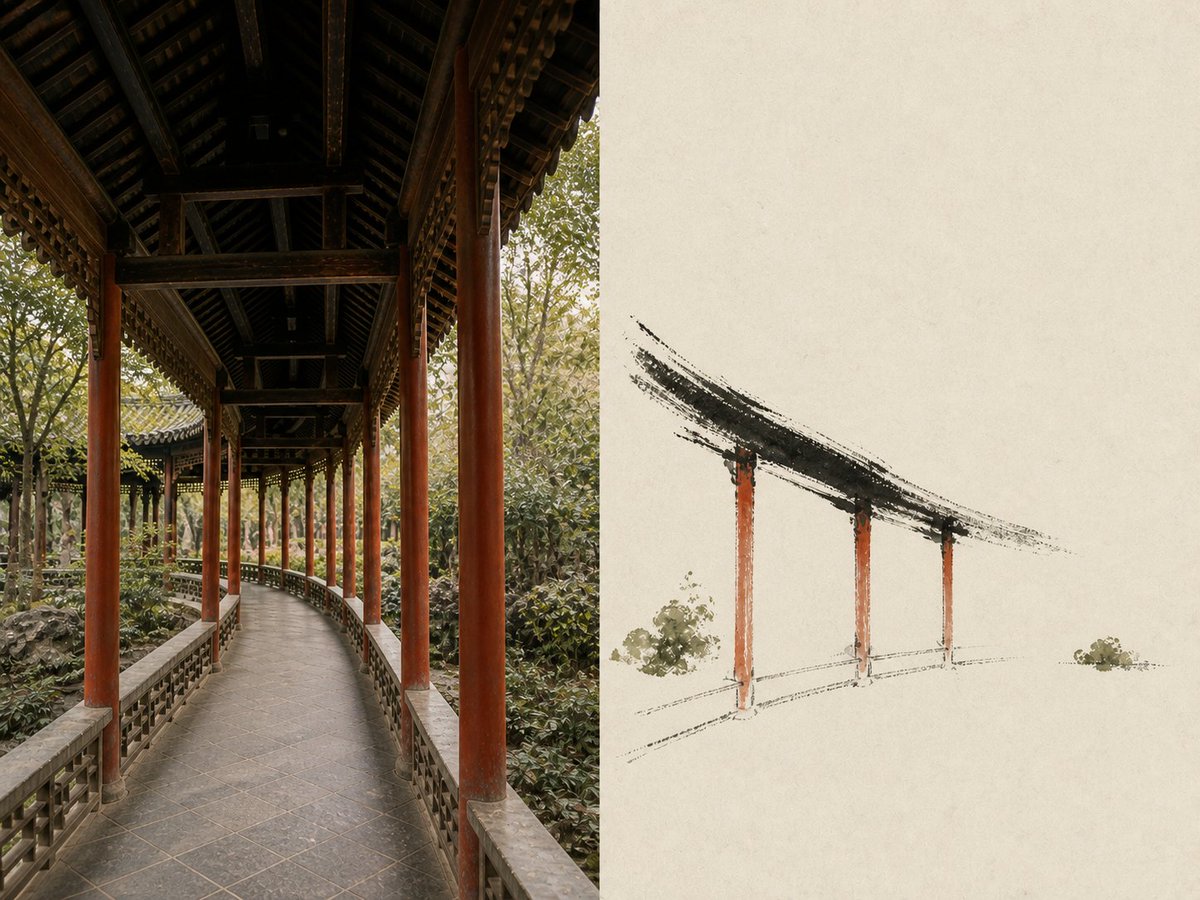
Full prompt
Please transform each photo I upload into an independent "Travel Observation Archive" design poster, without multi-image collage, outputting each photo individually.

The overall composition uses a 2:3 vertical layout, consisting of two echoing upper and lower areas. The upper real-life photography takes up about 43% of the screen, and the lower travel observation archive takes up about 57%. The boundary is clear and straight, without using torn paper, gradient blending, or decorative borders.

## Top: Real-life Photography

Faithfully preserve the original photo, accurately maintaining the subject's identity, quantity, appearance, structure, posture, orientation, terrain, buildings, roads, water, spatial relationships, real materials, natural light and shadow, and original color atmosphere.

Perform only restrained exhibition-grade photography color correction, moderately improving exposure, layers, clarity, and color unity, giving it the texture of travel magazines, independent publications, and photography exhibitions.

To adapt to the vertical format, cropping can be adjusted naturally, or the sky, ground, water surface, and surrounding environment can be reasonably expanded, but the subject must not be stretched, distorted, moved, replaced, or redesigned.

If the original image contains fog, clouds, snow, or low light, the real weather characteristics should be retained, but do not let thick fog, milky air, or low contrast obscure the subject. Subject edges, key textures, and spatial layers must be clearly discernible.

## Bottom: Travel Observation Archive

Redraw the same scene from the photo on warm off-white natural archive paper.

First, identify the visual anchors in the photo that have the most travel narrative, such as:

Boats, lighthouses, lonely houses, RVs, bridges, stations, pavilions, gatehouses, towers, roads, docks, or other subjects that can represent the location and journey.

Use this subject as the core of the lower observation drawing and maintain its shape, proportion, orientation, structural features, and its relationship with the environment, so that people can recognize the original photo at a glance.

Use the following painting language:

- Pencil structural sketch
- Dry ink lines
- Fine but restrained cross-hatching
- A small amount of low-saturation colors extracted from the photo
- Local paper transparency
- Slight old archive grain
- Fine lead lines and observation labels
- Dimension references, direction lines, and environment records
- Loose but accurate travel manuscript texture

Do not make the bottom part look like precise architectural CAD, engineering drawings, or dense infographics. It should be like a page from a personal observation archive left by a traveler, architectural observer, or nature researcher, with a sense of knowledge but still quiet, poetic, and retaining a lot of white space.

The lower main drawing should occupy the main visual area. A few thin line annotations can appear around it, pointing out important structures, natural features, and spatial relationships that actually exist in the photo.

Set up 5 small observation boards of uniform size at the bottom, automatically selected based on the photo content:

- Geographical location schematic
- Terrain or skyline outline
- Front view or side view of the subject
- Local structural section
- Weather, water surface, cloud, vegetation, or road observation

All boards should come from the content of the original photo, and no unrelated structures should be added out of thin air.

## Chinese Typography

According to the location, subject, and travel imagery in the photo, automatically generate:

- A Chinese main title of 2 to 6 characters
- Numbering, e.g., "Number 01"
- A four-digit year
- A short, restrained, and visual Chinese description
- 3 to 4 items of scene information
- 4 to 6 structural observation labels
- 5 bottom board titles...
Original prompt
请将我上传的每一张照片分别制作成一张独立的“旅行观察档案”设计海报,不进行多图拼贴,每张照片单独输出。

整体采用2:3竖版构图,由上下两个相互呼应的区域组成。上方实景摄影约占画面43%,下方旅行观察档案约占57%。分界清晰、平直,不使用撕纸、渐变融合或装饰性边框。

## 上方:实景摄影

忠实保留原始照片,准确维持主体身份、数量、外观、结构、姿态、方向、地形、建筑、道路、水域、空间关系、真实材质、自然光影与原有色彩氛围。

只进行克制的展览级摄影调色,适度改善曝光、层次、清晰度和色彩统一性,使其具有旅行杂志、独立出版物与摄影展览的质感。

为适配竖版画幅,可以自然调整裁切,或合理扩展天空、地面、水面及周边环境,但不得拉伸、扭曲、移动、替换或重新设计主体。

如果原图包含雾、云、雪或弱光,应保留真实天气特征,但不要让浓雾、乳白色空气感或低对比度遮蔽主体。主体边缘、关键材质和空间层次必须清楚可辨。

## 下方:旅行观察档案

在温暖的米白色天然档案纸上,重新绘制照片中的同一场景。

首先识别照片中最具有旅行叙事性的视觉锚点,例如:

船、灯塔、孤屋、房车、桥梁、车站、亭阁、门楼、塔楼、道路、码头或其他能够代表地点与旅程的主体。

将这一主体作为下方观察绘图的核心,并保持其外形、比例、方向、结构特征及其与环境之间的关系,使人能够一眼认出原照片。

使用以下绘画语言:

- 铅笔结构素描
- 干墨线条
- 细密但克制的排线
- 少量从照片中提取的低饱和设色
- 局部纸张透底
- 轻微旧档案颗粒
- 精细引线与观察标注
- 尺寸参考、方向线和环境记录
- 松散但准确的旅行手稿质感

不要把下方做成精确的建筑CAD、工程制图或密集科普信息图。它应该像旅行者、建筑观察者或自然研究者留下的一页私人观察档案,具有知识感,但仍然安静、诗意并保留大量留白。

下方主体绘图应占据主要视觉区域。周围可以出现少量细线标注,指出照片中真实存在的重要结构、自然特征和空间关系。

底部设置5个尺寸统一的小型观察图板,根据照片内容自动选择:

- 地理位置示意
- 地形或天际线轮廓
- 主体正视图或侧视图
- 局部结构剖面
- 天气、水面、云层、植被或道路观察

所有图板均应来自原照片内容,不得凭空添加无关结构。

## 中文排版

根据照片中的地点、主体和旅行意象,自动生成:

- 一个2至6字的中文主标题
- 编号,例如“编号 01”
- 四位数年份
- 一句简短、克制且具有画面感的中文说明
- 3至4项场景信息
- 4至6个结构观察标注
- 5个底部图板标题…
Use this prompt in the VdoBloom image editor.
Opens the image editor with this prompt — add your own photo to generate.