Yukata Character Sheet Generator
Full prompt
[Final Product to be Created]
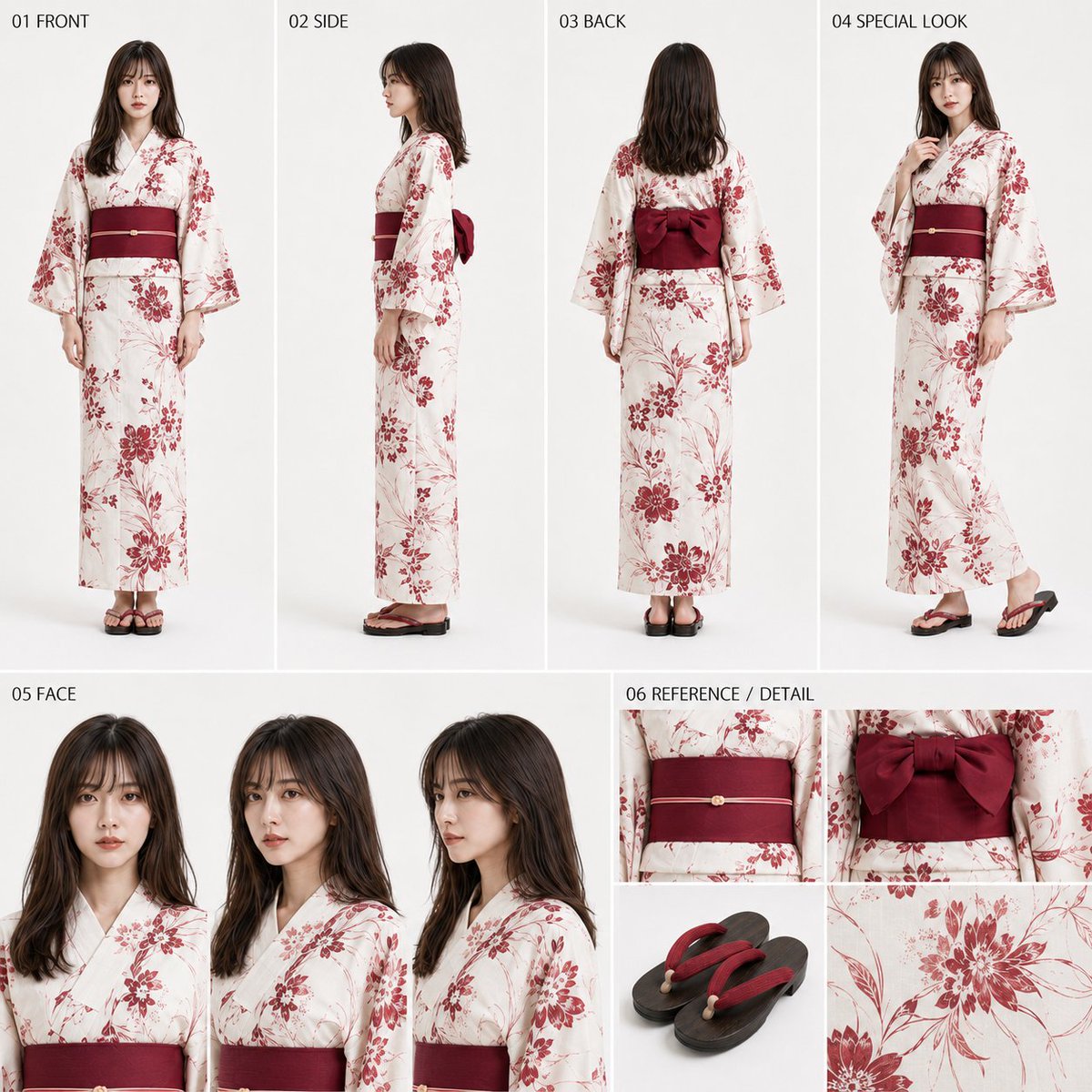
Using the single full-body reference image of a woman attached along with this instruction as the sole person reference, and using the group of yukata reference images attached simultaneously, create a high-quality photorealistic simple character sheet of the same person wearing a yukata in a specified color scheme. The sheet should be practical and visually appealing for sharing, allowing easy verification of the person, yukata, sash (obi), and face.

[Input Items]
Aspect Ratio: [1:1 / 9:16]
Color Scheme Type: [White-based / Indigo-based / Red-based]
If unentered, default to 1:1 and White-based.

[References Used]
Image A = One full-body reference image of a woman. The sole person reference.
Image B = Reference for the white-based color scheme. White to light-colored fabric, light cool-toned pattern colors, light-colored obi.
Image C = Reference for the indigo-based color scheme. Indigo fabric, white to light-colored pattern colors, dark-colored obi.
Image D = Primary reference for the red-based color scheme and the common pattern framework. White to bright base color, red to dark red pattern colors, dark red obi.
Image E = Supplementary reference for the back knot of the obi and traditional Japanese footwear.

[Person Consistency]
Maintain consistency with Image A in facial features, eyes, contour, nose, mouth, hairstyle, hair color, hair length, bangs, parting, age perception, skin tone, height, shoulder width, rib cage, torso length, waist position, curve, hip roundness, body type, head-to-body ratio, overall proportions, and leg/arm length. Maintain a slender and natural feminine three-dimensionality; do not shorten the torso or make it boxy or flat. Do not inherit clothing, background, or poses from the original image.

[Hairstyle Consistency]
Make the hairstyle from Image A common across all views. Prohibit hair upsweeps, buns, upstyles, braiding, adding hair ornaments, or using different hairstyles only for SIDE/BACK views. Keep hair in an orderly state, avoiding strong disorder, spreading, jumping, wind-blown collapse, or chaotic hair bundles. Ensure it gathers naturally from the back of the head to the tips even in the BACK view, appearing as the same person with the same hairstyle in all views.

[Yukata Design]
All three color schemes should be the same design in different colors. Fix the skeleton of the pattern design using Image D as the primary reference, changing only the base color, pattern color, and obi color depending on the scheme. Do not change the type of pattern, main floral motifs, or streamline composition to something different for each scheme. Ensure natural collar overlap, sleeves, bodice, hem, and obi position/wrapping/layering for a beautiful, tidy fit. Give the sleeves and bodice a natural drape.

[Color Schemes]
White-based: Primarily Image B. White to light ecru base, common pattern in light blue/gray-blue cool tones, light blue obi. Cool and elegant.
Indigo-based: Primarily Image B. Indigo to dusty blue base, common pattern in white/light colors, dark navy to deep indigo obi. Calm and dignified.
Red-based: Primarily Image D. White to bright ecru base, common pattern in red to dark red tones, dark red to deep magenta obi. Glamorous, mature, and elegant.

[Obi & Footwear]
Use a half-width obi suitable for yukata, tightening it appropriately around the waist. Do not unnaturally compress the torso, and prevent the obi area from appearing loose and cylindrical due to insufficient tightening. In the BACK view, clearly show a natural knot shape based on Image E. Use the shape and atmosphere of Image E as the primary reference for footwear.

[Fixed Layout]
Do not change the pre-designated layout. The total is approx. 58% top tier, 42% bottom tier.
Top Tier: 01 FRONT (approx. 22%) / 02 SIDE (approx. 22%) / 03 BACK (approx. 22%) / 04 SPECIAL LOOK (approx. 34%).
Bottom Tier: 05 FACE (approx. 62%) / 06 REFERENCE / DETAIL (approx. 38%).
Views 01-04 include head to footwear. 04 is a larger full-body 3/4 view. 05 consists of three face views: front, diagonal 3/4, and light profile. 06 is an auxiliary frame for verifying the obi, footwear, and common pattern.

[02 SIDE Critical Condition]
Ensure a clear direct-profile full-body view, avoiding a stiff, board-like stance. Create a side profile where the torso naturally tightens at the obi position, with a smooth transition from natural forward breast thickness -> tightening at the obi -> slight waist curve -> backward hip roundness. Do not make the torso cylindrical, flat, or plank-like. Keep the neck naturally long, shoulders relaxed and dropped, and the back and pelvis naturally stable. Balance feminine three-dimensionality with a beautiful yukata fit even in profile.

[Text Display Rules]
Display ONLY the text: "01 FRONT", "02 SIDE", "03 BACK", "04 SPECIAL LOOK", "05 FACE", "06 REFERENCE / DETAIL". Do not add Japanese supplements, descriptions, footnotes, annotations, small frame captions, bottom comments, color explanations, or decorative text. Unify the font, color, size, and placement tone of the headings.

[Background & Quality]
Background is white or very light neutral. Photorealistic, high quality, natural human body/face/hands/feet, no structural breakdown of yukata/obi. Unify identical personhood, body type, and hairstyle across all views. Maintain fixed layout composition/order/roles for both 1:1 and 9:16, adjusting only margins and frame dimensions naturally.

[Prohibitions]
Changing person, excessive beautification/rejuvenation/aging, small-face filtering, excessive leg lengthening, body type modification, boxy/flat torso, hairstyle change/disorder, different patterns per color scheme, making the torso look cylindrical by showing the obi loosely, turning it into a kimono/dress/cosplay, unauthorized text, flashy backgrounds, information overload, extreme poses.

[Most Important]
Maintain the same person, body type, and hairstyle from Image A in all views, and establish the common pattern derived from Image D in white/indigo/red schemes. In particular, do not compromise the tightness of the obi in the SIDE view, the feminine side profile, hair stability, and beautiful fitting.
Original prompt
【今回作る完成物】
本指示書と同時に添付された女性の全身参照画像1枚を唯一の人物参照として使用し、同時添付の浴衣参考画像群を用いて、指定配色の浴衣を着た同一人物の高品質な実写・簡易キャラクターシート1枚を作成する。共有用として見栄えがよく、人物・浴衣・帯・顔を確認しやすい実用的な1枚にする。
【入力項目】
アスペクト比:[1:1/9:16]
配色タイプ:[白系/藍色系/赤系]
未入力時は1:1、白系とする。
【使用参照】
Image A=女性の全身参照画像1枚。唯一の人物参照。
Image B=白系配色の参考。白〜淡色地、淡い寒色系の柄色、淡色帯。
Image C=藍色系配色の参考。藍色地、白〜淡色の柄色、濃色帯。
Image D=赤系配色と共通柄骨格の主参考。白〜明るい地色、赤〜えんじ系の柄色、えんじ系帯。
Image E=帯の後ろ結びと和装履物の補助参考。
【人物固定】
Image Aと同一人物として、顔立ち、目元、輪郭、鼻、口元、髪型、髪色、髪の長さ、前髪、分け目、年齢感、肌色、身長感、肩幅、胸郭、胴の長さ、腰位置、くびれ、ヒップの丸み、体型、頭身、全身比率、脚・腕の長さを維持する。細身で自然な女性らしい立体感を保ち、胴を短くしたり寸胴化・平板化しない。元画像の服装・背景・ポーズは継承しない。
【髪型固定】
Image Aの髪型を全ビューで共通にする。結い上げ、まとめ髪、アップスタイル、編み込み化、髪飾り追加、SIDE・BACKだけ別の髪型にすることを禁止する。髪は整った状態を保ち、強い乱れ、広がり、跳ね、風でなびいたような崩れ、無秩序な毛束化を避ける。BACKでも後頭部から毛先まで自然にまとまり、全ビューで同じ髪型の同一人物として見えること。
【浴衣デザイン】
3配色とも同一デザインの色違いとする。柄模様の骨格はImage Dを主参照として固定し、配色によって地色、柄色、帯色のみを変える。柄の種類、主要な花模様、流線構成を配色ごとに別物へ変更しない。襟合わせ、袖、身頃、裾、帯の位置・巻き方・重なりを自然にし、着崩れのない美しい着付けにする。袖と身頃には自然な落ち感を持たせる。
【配色】
白系:Image Bを主参考。白〜淡い生成り地、共通柄を淡い水色・灰青などの寒色系、帯は淡い水色系。涼しげで上品。
藍色系:Image Cを主参考。藍色〜くすんだ青地、共通柄を白〜淡色、帯は濃紺〜深い藍色。落ち着きがあり端正。
赤系:Image Dを主参考。白〜明るい生成り地、共通柄を赤〜えんじ系、帯はえんじ〜深い赤紫。華やかで大人っぽく上品。
【帯・履物】
帯は浴衣に合う半幅帯とし、腰まわりを適度にしっかり締める。胴を不自然に押しつぶさず、締め付け不足で帯周辺が緩く筒状に見えないようにする。BACKではImage Eを参考に自然な結び形状を明確に見せる。履物はImage Eの形状と雰囲気を主参考にする。
【固定レイアウト】
指定済みレイアウトを変更しない。全体は上段約58%、下段約42%。
上段:01 FRONT約22%/02 SIDE約22%/03 BACK約22%/04 SPECIAL LOOK約34%。
下段:05 FACE約62%/06 REFERENCE / DETAIL約38%。
01〜04は頭頂から履物まで入れる。04は大きめの全身3/4ビュー。05は正面・斜め3/4・軽い側面寄りの顔3点。06は帯、履物、共通柄の確認補助枠。
【02 SIDE重要条件】
明確な真横の全身ビューとし、硬い棒立ちにしない。帯位置で胴が自然に引き締まり、胸の自然な前方向の厚み→帯位置の締まり→腰の軽いくびれ→ヒップの後方への丸みが滑らかにつながる横姿にする。胴を筒状・平板・板状にしない。首は自然に長く、肩は力まず落とし、背中・骨盤を自然に安定させる。真横でも女性らしい立体感と浴衣の美しい着こなしを両立する。
【文字表示ルール】
表示してよい文字は「01 FRONT」「02 SIDE」「03 BACK」「04 SPECIAL LOOK」「05 FACE」「06 REFERENCE / DETAIL」のみ。日本語補足、説明文、脚注、注釈、小枠キャプション、下部コメント、配色説明、装飾文字を追加しない。見出しの書体・色・サイズ・配置トーンは統一する。
【背景・品質】
背景は白またはごく薄いニュートラル背景。実写、高品質、自然な人体・顔・手・足元、浴衣・帯の構造破綻なし。同一人物性、体型、髪型を全ビューで統一する。1:1/9:16とも固定レイアウトの構成・順序・役割を維持し、余白と枠寸法のみ自然に調整する。
【禁止事項】
別人化、過度な美化・若返り・老化、小顔化、過度な脚長化、体型変更、寸胴化、平板化、髪型変更・乱れ、配色ごとの別柄化、帯を緩く見せて胴を筒状にすること、着物・ドレス・コスプレ化、指定外文字、派手な背景、情報過多、極端なポーズ。
【最重要】
Image Aの同一人物・体型・髪型を全ビューで維持し、Image D由来の共通柄を白系/藍色系/赤系のいずれかで成立させる。特にSIDEの帯の締まり、女性らしい横姿、髪の安定、美しい着付けを崩さない。
Use this prompt in the VdoBloom image editor.
Opens the image editor with this prompt — add your own photo to generate.