AI Text to Video Generator: Type a Prompt, Get a Video

Updated

VdoBloom's AI text to video generator turns a written prompt into a video clip. You describe the scene (who is in frame, what happens, how the camera moves, the light and setting) and the model you pick renders it as an MP4. You don't need source footage or editing skills, and it all runs in the browser.

Is it free? New accounts get 10 free credits with no card. That covers a full 5-second clip on several models: Runway Gen-3 costs 10 credits, P-Video at 720p costs 8, and Seedance 2 Mini at 480p costs 8. After that you pay per clip in credits. The Lite plan is 300 credits for $15 a month, or $19.50 as a one-time pack that never expires. The exact credit cost of your model, length and resolution shows before you press Generate.

The prompt box connects to 40 model versions from 15 families, including Google Veo 3.1, Seedance 2.5, Kling 3.0 Omni, Wan 3.0, Runway Gen-4.5, MiniMax H3, PixVerse V6 and P-Video. You can send the same prompt to a second model without retyping it. The table below shows which model fits which job and what each one costs.

It is built for creators making Shorts, Reels and TikToks, marketers testing ad concepts, and anyone who needs b-roll or a storyboard shot fast. Free-tier downloads carry a VdoBloom watermark. Paid plans and credit packs download clean, and you keep ownership of what you generate.

Examples

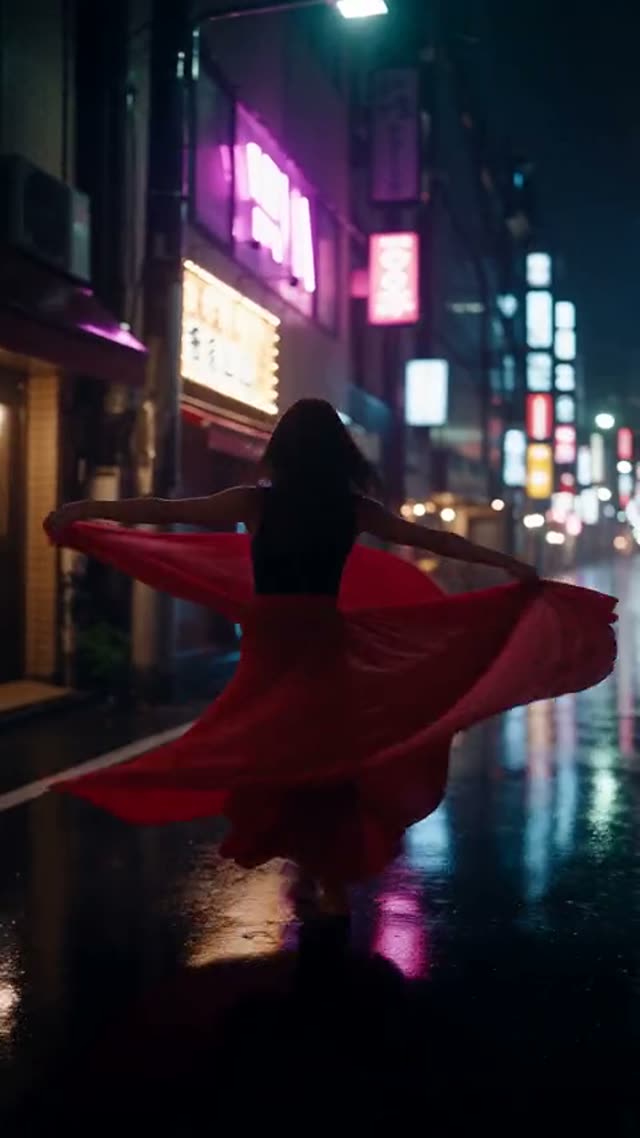
  • AI Text to Video Generator: Type a Prompt, Get a Video — Seedance 2.5 example

    Seedance 2.5

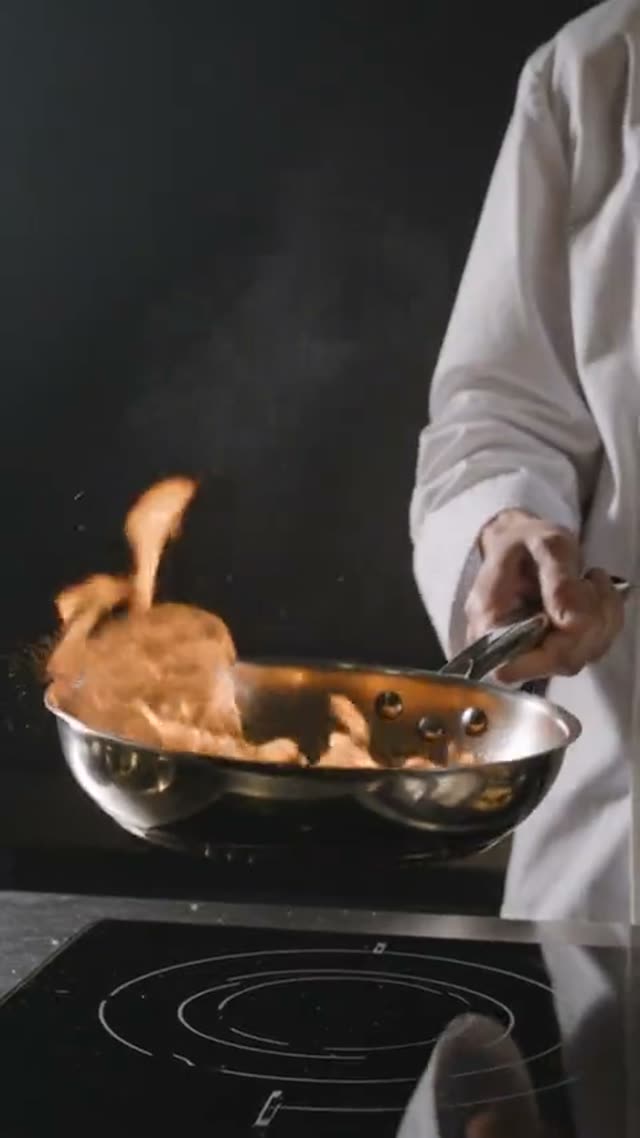
  • AI Text to Video Generator: Type a Prompt, Get a Video — Kling V3.0 Omni Text-to-Video example

    Kling V3.0 Omni Text-to-Video

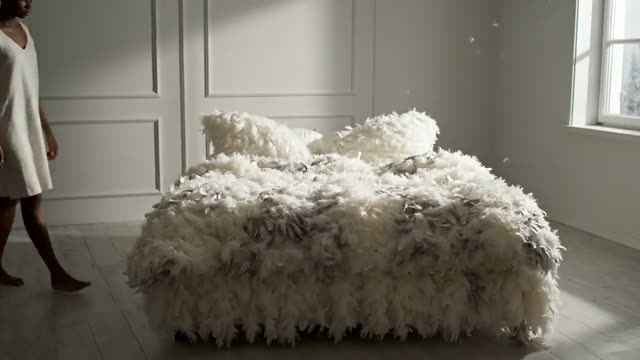
  • AI Text to Video Generator: Type a Prompt, Get a Video — Veo 3.1 High Quality example

    Veo 3.1 High Quality

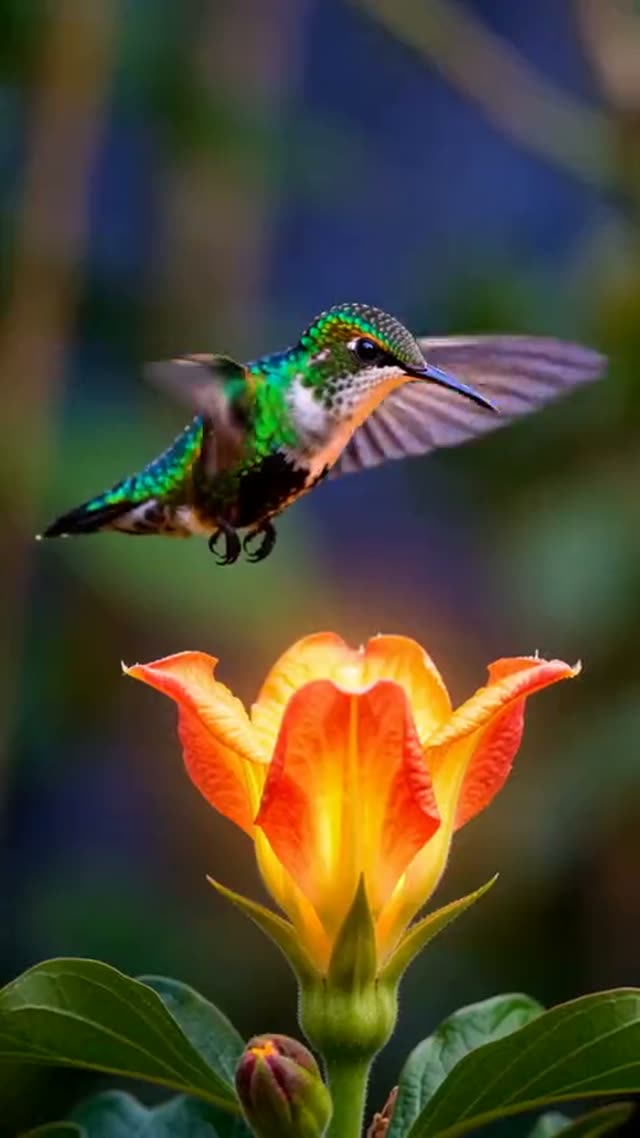
  • AI Text to Video Generator: Type a Prompt, Get a Video — Wan AI 3.0 Video example

    Wan AI 3.0 Video

Watch the tutorial

How to Make a Video from Text with AI (Text to Video Tutorial)

Type a prompt and get an AI video with VdoBloom's Text to Video tool. Pick a model (we use P-Video, version P-Video 2), describe your scene, then set length, resolution and shape. In this video: 5 seconds at 720p, 16:9,…

All VdoBloom tutorials

How it works

  1. 1

    Write your prompt

    Start with the subject and the action, then add the camera move, lighting and setting. Use the AI Prompt Builder to turn a rough idea into a structured prompt, or tap a camera chip (Push-in, Orbit 360°, Crane up, FPV one-take and more) to add a precise move.

  2. 2

    Pick a model

    Choose by job: Seedance 2.5 for long single takes and believable motion, Veo 3.1 for cinematic shots, Kling 3.0 Omni for scenes with native audio and a 4K option, Wan 3.0 or Seedance 2 Mini to keep the cost down.

  3. 3

    Set length, resolution and aspect ratio

    Each model lists its own options: Seedance 2.5 runs 4 to 30 seconds, Kling 3.0 Omni 3 to 15, Runway Gen-4.5 5, 8 or 10. Pick 16:9 for YouTube, 9:16 for Shorts and Reels, or 1:1 for feeds. The credit cost updates as you change settings.

  4. 4

    Generate

    Credits are taken when the job starts. Most clips finish within a few minutes, and the time depends on the model and length. If a generation fails, its credits are refunded.

  5. 5

    Download, refine or upscale

    Save the MP4, change one part of the prompt and run it again, or send the clip to the AI Video Upscaler for a sharper 1080p or 4K master.

Why use this tool

  • 40 models, one prompt box

    Veo 3.1, Seedance 2.5, Kling 3.0 Omni, Wan 3.0, Runway Gen-4.5, MiniMax H3, PixVerse V6, P-Video, Vidu, HappyHorse, SkyReels and Gemini Omni, all without separate accounts or API keys.

  • Cost shown before every clip

    The credit cost of the exact model, duration and resolution is displayed before you generate, so there is no surprise bill.

  • Clips up to 30 seconds

    Seedance 2.5 and Wan 3.0 both render up to 30 seconds in a single generation, which most single-model tools do not offer.

  • Up to 4K and 21:9

    Kling 3.0 Omni offers a 4K tier, MiniMax H3 renders 2K up to 21:9, and most models cover 16:9, 9:16 and 1:1.

  • Camera and lens chips

    Twelve one-tap camera moves and six lens looks (anamorphic, 85mm portrait, 16mm film, macro and more) write the right camera language into your prompt.

  • Credits that do not expire

    One-time credit packs never expire. Subscription credits reset each billing cycle. Use them on any VdoBloom tool, not just text to video.

Which text-to-video model should you use?

No single model is best at everything. Each one trades off realism, motion, length, audio and price differently. These are the models most people start with on this tab. Credits are for one 5-second clip at 720p unless the row says otherwise; Veo 3.1 is a flat price per clip.

Seedance 2.5
Best for:Believable physical motion, long single takes
Length:4–30 s
Resolution:480p, 720p, 1080p
Credits (5 s, 720p):126 (56 at 480p)
Seedance 2 Mini
Best for:Cheap, fast drafts
Length:4–15 s
Resolution:480p, 720p
Credits (5 s, 720p):17 (8 at 480p)
Veo 3.1 Fast
Best for:Cinematic shots with audio, quick turnaround
Length:One clip
Resolution:16:9 or 9:16
Credits (5 s, 720p):25 per clip
Veo 3.1 High Quality
Best for:Highest-fidelity Veo render
Length:One clip
Resolution:16:9 or 9:16
Credits (5 s, 720p):100 per clip
Kling 4.0
Best for:One shot up to 30 s, native audio
Length:3–30 s
Resolution:720p, 1080p
Credits (5 s, 720p):57 (85 at 1080p)
Kling 3.0 Omni
Best for:Native audio, 4K option
Length:3–15 s
Resolution:720p, 1080p, 4K
Credits (5 s, 720p):40 (54 at 1080p, 151 at 4K)
Kling V3 Turbo
Best for:Fast Kling clips
Length:3–15 s
Resolution:720p, 1080p
Credits (5 s, 720p):40
Wan 3.0
Best for:Native audio, up to 30 s at low cost
Length:2–30 s
Resolution:480p, 720p, 1080p
Credits (5 s, 720p):32 (16 at 480p)
Runway Gen-4.5
Best for:Cinematic look
Length:5, 8 or 10 s
Resolution:Set by model
Credits (5 s, 720p):48
Runway Gen-3
Best for:Low-cost Runway option
Length:5 or 10 s
Resolution:720p, 1080p
Credits (5 s, 720p):10
MiniMax H3
Best for:Widescreen 21:9 and 2K with audio
Length:4–15 s
Resolution:768P, 2K
Credits (5 s, 720p):20 (at 768P)
PixVerse V6 Max
Best for:Shot-by-shot prompts, audio on or off
Length:1–15 s
Resolution:360p–1080p
Credits (5 s, 720p):18 (24 with audio)
PixVerse V6
Best for:Multi-shot storytelling
Length:1–15 s
Resolution:360p–1080p
Credits (5 s, 720p):45
P-Video
Best for:Quick, low-cost test renders
Length:4–10 s
Resolution:720p, 1080p
Credits (5 s, 720p):8
P-Video 2
Best for:Longer low-cost clips with native audio
Length:1–20 s
Resolution:720p, 1080p
Credits (5 s, 720p):11

Read more: Seedance 2.5 · Seedance 2 Mini · Veo 3.1 Fast · Veo 3.1 High Quality · Kling 4.0 Text-to-Video · Kling 3.0 Omni Text-to-Video · Kling V3 Turbo Text-to-Video · Wan 3.0 Video · Runway Gen-4.5 · Runway Gen-3 · MiniMax H3 Text-to-Video · PixVerse V6 Max Text-to-Video · PixVerse V6 · P-Video · P-Video 2

Is text to video AI free on VdoBloom?

Yes, to start. Every new account gets 10 credits without entering a card. That is enough for one full 5-second clip on Runway Gen-3 (10 credits), P-Video at 720p (8) or Seedance 2 Mini at 480p (8). The clip renders at the model's normal quality, not as a preview. On the free tier the download carries a VdoBloom watermark. Paid plans and packs remove it.

After the free credits, you pay only for what you generate. The Lite plan gives 300 credits for $15 a month, or $19.50 as a one-time pack. One-time pack credits never expire. Subscription credits reset each billing cycle.

What 300 credits buys in text to video

Credits are spent per clip, so how far 300 credits go depends on the model. Here is how many 5-second clips the Lite allowance covers on popular choices. The figures are whole clips, rounded down.

P-Video, 5 s at 720p
Credits per clip:8
Clips from 300 credits:37
Seedance 2 Mini, 5 s at 720p
Credits per clip:17
Clips from 300 credits:17
Veo 3.1 Fast, one clip
Credits per clip:25
Clips from 300 credits:12
Wan 3.0, 5 s at 720p
Credits per clip:32
Clips from 300 credits:9
Kling 3.0 Omni, 5 s at 720p
Credits per clip:40
Clips from 300 credits:7
Seedance 2.5, 5 s at 720p
Credits per clip:126
Clips from 300 credits:2
Seedance 2.5, 30 s at 720p
Credits per clip:756
Clips from 300 credits:Needs a larger pack

Read more: Plans and credit packs · How credits work · Low-cost AI video models

How to write a text-to-video prompt that works

Write prompts like a shot list. A good prompt names the subject first, then what the subject does, then the camera, then the light and setting. A clip of a few seconds can only show one or two actions, so keep each prompt to a single beat.

  • Subject and action first: "A barista pours latte art into a white cup" beats "cozy café vibes".
  • Name one camera move: slow dolly-in, orbit, crane up, handheld tracking. The camera chips add these for you.
  • Describe light concretely: golden hour, neon rim light, overcast daylight, single window light.
  • Match the aspect ratio to the platform before generating: 9:16 for Shorts, Reels and TikTok, 16:9 for YouTube.
  • If a result is close, change one thing at a time and regenerate rather than rewriting the whole prompt.
  • Not following the prompt? Try the same text on a second model. Each family reads prompts differently.

Read more: What makes a good video prompt · Camera movement prompts for AI video · Why AI video ignores your prompt · Seedance prompts with example clips

How do you get a specific camera move, like a drone shot?

Name the move in plain camera words, in its own sentence, after the subject and action. Use one move per clip. Asking for a drone shot and an orbit and a zoom in five seconds usually gives a muddled camera. The Direct the shot chips on this tab write the move for you, phrased the way each model family reads it best (cinematography terms for Veo, a separate camera sentence for Seedance, bracket commands for MiniMax).

Example drone prompt: "A red pickup drives along a coastal cliff road at sunset. The camera flies as a high aerial drone shot, slowly tracking alongside the truck from above. Warm golden light, long shadows."

Aerial drone
What to write:High aerial drone shot, slowly tracking over the scene
Good for:Landscapes, roads, coastlines, property
FPV drone
What to write:FPV drone shot, one continuous take, diving and weaving through the scene
Good for:Energetic fly-throughs, action, venues
Dolly-in (push-in)
What to write:Slow dolly-in toward the subject
Good for:Reveals, emotion, product close-ups
Pull-back
What to write:Dolly-out pull-back reveal of the wider scene
Good for:Endings, showing scale
Orbit
What to write:360-degree orbit shot around the subject at a steady speed
Good for:Products, characters, statues
Crane up
What to write:Rising crane shot to a high angle above the subject
Good for:Openings, crowds, establishing shots
Handheld
What to write:Handheld camera with subtle natural shake
Good for:UGC-style, documentary, street scenes
Top-down
What to write:Overhead top-down bird's-eye shot
Good for:Food, desks, flat lays
Dolly zoom
What to write:Dolly zoom (vertigo effect), background stretches away
Good for:Shock or realization moments
Static
What to write:Static locked-off tripod shot
Good for:Talking heads, dialogue, product demos

Read more: Camera movement prompts for AI video · How to write a better AI image prompt

What people make with text to video

Text to video is most useful when you need footage you could not easily film yourself.

  • Short-form social clips: hooks, loops and visual gags for TikTok, Reels and YouTube Shorts.
  • Ad concepts: test several visual directions for a campaign before paying for a shoot.
  • B-roll and cutaways for explainer videos, podcasts and faceless channels.
  • Storyboards and pre-visualization: see a scene move before committing to production.
  • Product launch teasers, music visuals and event intros.

Read more: Viral video generator · Long AI video in a single take · Best AI video model for realism

Text to video vs image to video

Text to video invents the whole frame from your words, so it suits new scenes and ideas. Image to video starts from a picture you upload and animates it, which keeps a face, a product or a layout exactly as it looks. If the subject has to match a real photo, generate a still first (or use your own) and animate it on the Image to Video tab.

Read more: Image to Video AI · Text to video vs image to video · AI Image Generator

Limits to know before you generate

AI text to video is strong at single shots and short sequences. It is weaker at precise on-screen text, exact brand logos and long scripted dialogue. Hands and fast complex choreography can still come out wrong. Clip length is set by the model, up to 30 seconds per generation on Seedance 2.5 and Wan 3.0. Longer videos are made by joining clips. Prompts are screened before a job runs and every generation follows VdoBloom's content policies, so some requests are refused. Each model page shows its content-filter level.

Frequently asked questions

How do I turn a text prompt into a 10 second video with AI?

Open Text to Video, write one scene (subject, action, camera move, light), and pick a model that offers 10 seconds: Wan 3.0, Kling 4.0, Kling 3.0 Omni, Seedance 2.5 and Runway Gen-4.5 all do. Set the length to 10 s, choose 9:16 or 16:9, check the credit cost shown, and press Generate. A 10-second 720p clip costs 64 credits on Wan 3.0, 81 on Kling 3.0 Omni and 114 on Kling 4.0.

How to write a good prompt for an AI video generator?

Use the formula subject + action + camera + light and setting + style, in that order, and keep it to one beat per clip. For example: "An old fisherman mends a net on a wooden dock. The camera slowly pushes in. Overcast morning light, light fog. Realistic, 35mm film look." Change one part at a time when you refine it.

How do I make an AI video longer than 10 seconds?

Pick a model that renders long clips in one pass: Wan 3.0, Kling 4.0 and Seedance 2.5 go up to 30 seconds, and Kling 3.0 Omni to 15. For anything longer, generate several shots (using the last frame of one as the start of the next on Image to Video) and join them. Our guide on making AI video longer walks through both methods.

How can I make an AI video with a specific camera movement like a drone shot?

Write the move as its own sentence after the action, for example "The camera flies as a high aerial drone shot, slowly tracking over the coastline." Use only one move per clip. On VdoBloom you can tap the FPV one-take, Push-in, Orbit 360°, Crane up or other camera chips to insert wording tuned to the model you picked.

Is there a free AI text to video generator?

Yes. VdoBloom gives every new account 10 free credits with no card. That covers one full 5-second clip on Runway Gen-3 (10 credits), P-Video at 720p (8 credits), or Seedance 2 Mini at 480p (8). Free-tier downloads carry a watermark. After that, the Lite plan is 300 credits for $15 a month or $19.50 one-time.

Which AI model is best for text to video?

It depends on the shot. Seedance 2.5 handles believable motion and long single takes up to 30 seconds. Veo 3.1 suits cinematic shots with audio. Kling 3.0 Omni adds native audio and a 4K tier. Wan 3.0 and Seedance 2 Mini are the cost-efficient picks. On VdoBloom you can send one prompt to several of them and compare.

How much does AI text to video cost?

Cost depends on the model, length and resolution, and it is shown before you generate. Examples for a 5-second 720p clip: P-Video 8 credits, Seedance 2 Mini 17, Wan 3.0 32, Kling 3.0 Omni 40, Seedance 2.5 126. Veo 3.1 Fast is 25 credits per clip. 300 credits cost $15 a month or $19.50 one-time.

How long can an AI text-to-video clip be?

Up to 30 seconds in a single generation on Seedance 2.5 and Wan 3.0. P-Video 2 goes to 20 seconds, Kling 3.0 Omni, MiniMax H3 and PixVerse V6 to 15, and Runway Gen-4.5 to 10. For longer videos, generate several clips and join them.

Do text-to-video downloads have a watermark?

Free-tier downloads include a VdoBloom watermark. Clips made on any paid plan or credit pack download without a watermark.

Can I make 4K video from text?

Yes. Kling 3.0 Omni has a 4K tier (151 credits for 5 seconds), and MiniMax H3 renders at 2K. You can also generate at 720p or 1080p and run the clip through the AI Video Upscaler to reach 4K.

Can text-to-video AI generate sound?

Several models generate audio with the video, including Veo 3.1, Kling 3.0 Omni, Wan 3.0, MiniMax H3, PixVerse V6 and P-Video 2. Check the model page for its audio support before you pick.

How long does text-to-video generation take?

Most clips finish within a few minutes. Faster variants such as Veo 3.1 Fast, Seedance 2 Fast and P-Video return sooner. Long or high-resolution clips take longer. You can leave the page and find the finished video in My Creations.

Can I use AI-generated videos commercially?

VdoBloom's terms say you keep ownership of the videos you generate; read the terms page for the full wording. You are responsible for the rights to anything you reference and for consent from any real person shown.

Why does the video not match my prompt?

Usually the prompt asks for too much in one clip. Lead with one subject and one action, name a single camera move, then regenerate after changing one element. If a model keeps missing, send the same prompt to another model.