Can You Use AI-Generated Images Commercially?
When AI-generated images are safe to use in ads, products and client work, what copyright does and does not protect, and what VdoBloom’s terms allow.
Contents (10 sections)
Usually yes, but it depends on three things: the terms of the tool and model that made the image, the rights to anything you fed in, and what the image shows, especially real people, brands and logos. On VdoBloom our terms let you use what you generate for personal and commercial purposes, including advertising, with no attribution. You still carry responsibility for your inputs and for how you use the result.
This is general information, not legal advice. For a high-stakes launch, read the current terms and talk to a lawyer in your country. If your question is about video, read our companion guide Can you use AI-generated videos commercially?
Quick facts
- VdoBloom terms: you keep ownership of what you generate and may use it commercially, worldwide, including in ads, with no attribution and no fee beyond your credits.
- Every model: the commercial use clause applies equally to every AI model on VdoBloom, and continues after your plan ends or your account closes.
- Watermark: downloads with no purchase carry a VdoBloom watermark; any paid plan or credit pack removes it.
- Your duty: you need the rights to what you upload, and you must follow the law and platform rules, including AI-labeling rules.
- Copyright: in the US, the Copyright Office says purely AI-generated material is not protected by copyright; human creative contribution can be.
Generate a commercial-ready image
Three questions that decide it
- What do the terms allow? The service's terms, and sometimes the underlying model's licence, set what you may do with the output. Read the commercial use section, not the marketing page.
- What went in? If you uploaded someone else's photo, artwork, logo or product shot, the output can carry their rights with it. A model processing an image does not make it yours.
- What does it show? A recognisable real person, a trademark or a copyrighted character raises issues that no tool's terms can clear for you.
Pass all three and most commercial uses are fine. Fail one and the best terms in the world will not help.
Using an image vs owning its copyright
These are two separate questions, and people mix them up.
Permission to use comes from the terms. If they grant commercial use, you can put the image in an ad, on a product page or in a client deck.
Copyright protection comes from the law, and it decides whether you can stop others copying the image. In its January 2025 report on copyrightability, the US Copyright Office said that material generated purely by AI from a prompt is not protected, while human authorship, such as creative selection, arrangement or edits, can be. Other countries take different views, and courts are still deciding cases.
In practice: you can usually use an AI image commercially, but a competitor might be able to use a near-identical one too. If you need exclusive rights, as with a logo, add real human design work and talk to a lawyer about registration.
What VdoBloom's terms say
Our terms, effective 11 November 2026, are direct on this. You keep ownership of the content you upload or generate. You may use it for personal and commercial purposes, including advertising and marketing, anywhere in the world. You may edit, cut, combine and reuse it. No attribution is required and no fee is due beyond the plan or credits you paid for. These rights continue after your subscription ends or your account is closed, and they apply to every model on the service.
The same section is clear about limits. You warrant that you hold the rights to what you submit. You are responsible for following the law, the rights of others and the rules of each platform where you publish, including any AI-labeling requirement. And VdoBloom does not warrant that generated content is free of third-party rights. All content is private to your account on every plan. For the watermark and ownership details, see what a paid download gets you.
An example made for commercial use
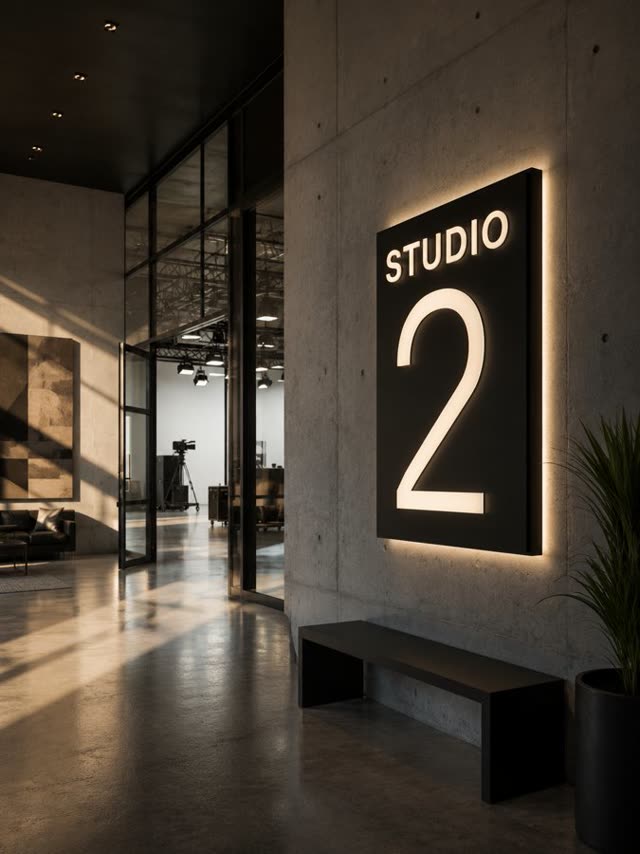
This image was made on VdoBloom with GPT Image 2 and is the sample in our image generator. Prompt summary: a backlit "STUDIO 2" sign in a concrete lobby, clean typography, late-afternoon light. GPT Image 2 starts at 3 credits. It shows a made-up sign, so there is no third-party brand to clear. Recreate this
Common commercial uses, and what to check
| Use | Usually fine? | Check |
|---|---|---|
| Social posts and blog images | Yes | No real people or brands without permission |
| Paid ads | Yes | Ad platform policies; AI labels where required; true claims |
| Product photos of your own product | Yes | The product shown must match what you sell |
| Print-on-demand, merch | Often | Marketplace rules; no characters or logos you do not own |
| Logos and brand marks | Use yes, protect maybe | Human design work if you need trademark or copyright strength |
| Stock sales | Depends | Many stock sites have their own AI submission rules |
| Images of real people | Only with consent | Likeness and publicity rights; our terms prohibit use without consent |
Real people, brands and styles
Real people are the biggest risk. Our terms prohibit using someone's likeness without consent, and many countries give people rights over their image. Use your own photo, a photo of someone who agreed in writing, or a generated face.
Trademarks are next. A generated image showing another company's logo on your product can confuse buyers and invite a complaint. Keep other brands out of commercial images.
Art styles are less clear. A broad style such as "watercolour" or "film noir" is generally fine. Naming a living artist to copy their look is a poor idea for commercial work even where it is not illegal.
Labeling AI images
Rules are spreading. Some ad platforms and marketplaces ask you to disclose AI-generated or altered images, especially realistic ones or those about social issues. Some regions are adding labeling laws. Even where nothing is required, a short note avoids complaints when an image is obviously illustrative. Our terms leave labeling with you, because the rules depend on where you publish.
A quick pre-publish checklist
- Did I have the rights to every image I uploaded?
- Does the image show a real, recognisable person? If so, do I have consent?
- Are there logos, characters or products that belong to someone else?
- Is every word in the image spelled right and true?
- Does the platform where I publish require an AI label?
How to do it on VdoBloom
- Sign up; you get 10 credits on sign-up to test.
- Open the AI Image Generator and pick a model: Nano Banana 2.1 from 3 credits (Try this prompt), or GPT Image 2.5 from 3 credits for images with text (Try this prompt).
- For your own products, use AI Product Photography with a real photo of the item.
- Upload only images you have the rights to use.
- Buy a one-time pack or plan before download so the file has no watermark.
- Keep a note of the prompt, model and date for each commercial image, in case anyone asks later.
Make product photos from your own item
FAQ
Can I sell products with AI-generated images on them?
Under VdoBloom's terms, yes. Check the marketplace's own rules and avoid characters, logos or real people you have no rights to.
Do I have to credit VdoBloom?
No. Our terms say no attribution is required.
Can I copyright an AI image?
In the US, purely AI-generated material is not protected, but your own creative additions can be. Rules differ by country; ask a lawyer if it matters for your business.
Do images from an account with no purchase have commercial rights?
The commercial use clause covers content you generate, and downloads on accounts with no purchase carry a watermark. Any paid plan or pack removes it.
Does the rule change by model?
On VdoBloom, no. Our terms say the commercial rights apply equally to every model on the service.
Try it yourself
Text to Image
Upload a photo or write a prompt, and see the credit price before you generate. Pay per use with credits that never expire.